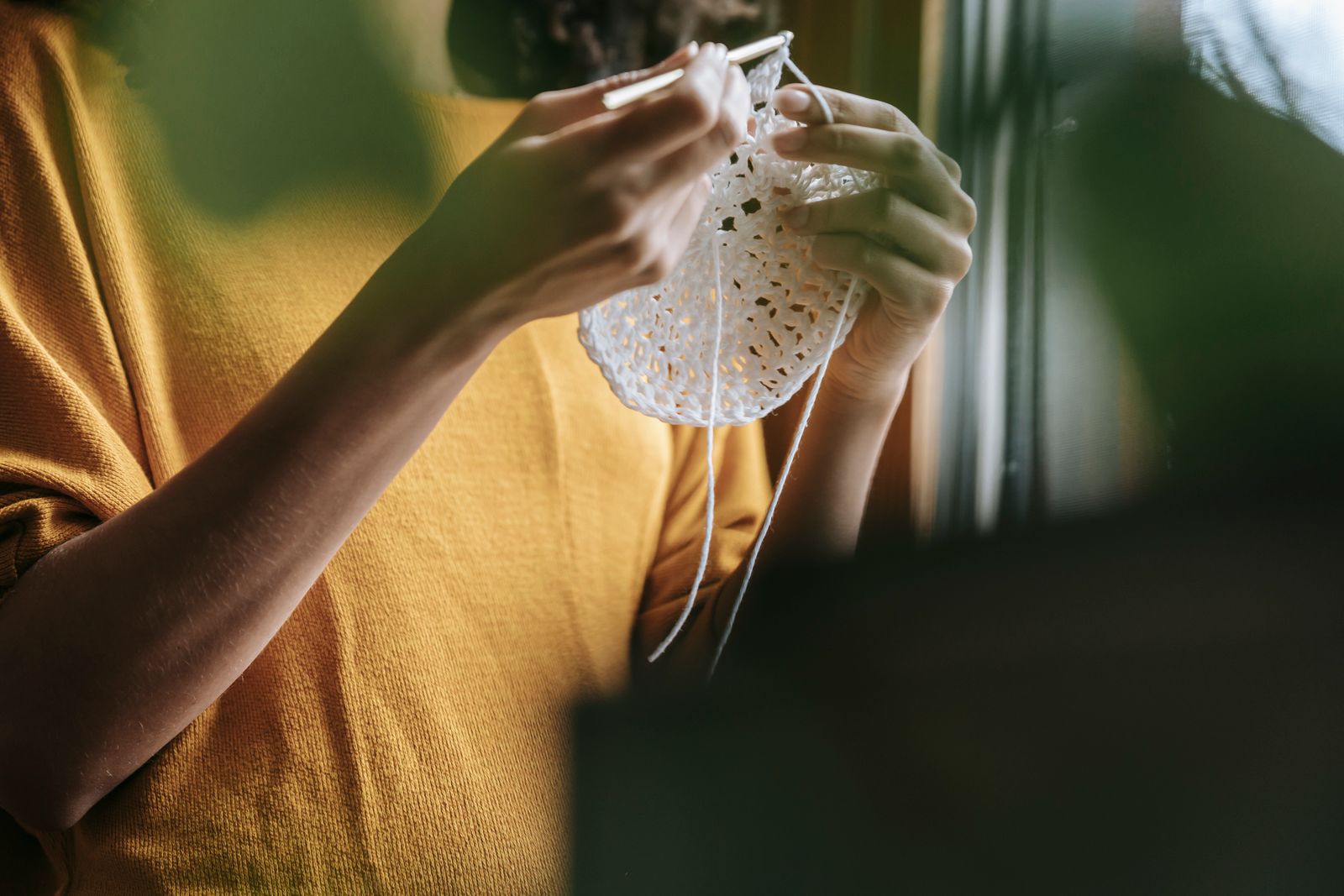
Blocking in crochet means wetting or steaming a finished piece, then pinning it to an exact shape and size while it dries. I explain it to new crocheters as the step that turns a slightly wonky, off-hook piece into one that lies flat and matches the pattern’s measurements.

Why the term confuses beginners
The word “blocking” doesn’t describe the action itself the way “wetting” or “pinning” would, which is why it trips people up the first time they read it in a pattern. I just think of it as the finishing step that squares everything up.
When it actually matters
Garments, lace, and joined motifs like granny squares benefit the most, since exact, matching measurements make assembly and fit far easier. I skip it entirely for amigurumi and most acrylic projects, where shape holds fine without it.
Frequently asked questions
Is blocking the same as steaming?
Steaming is one method of blocking. Wet blocking, using water instead of steam, is the other common method, and I choose between them based on the yarn fiber.
Do all crochet patterns require blocking?
No, only patterns where the finished measurements matter closely, like garments, benefit enough to be worth the extra step in my experience.
Ready to try blocking your own piece?
See our step-by-step guide to wet blocking.