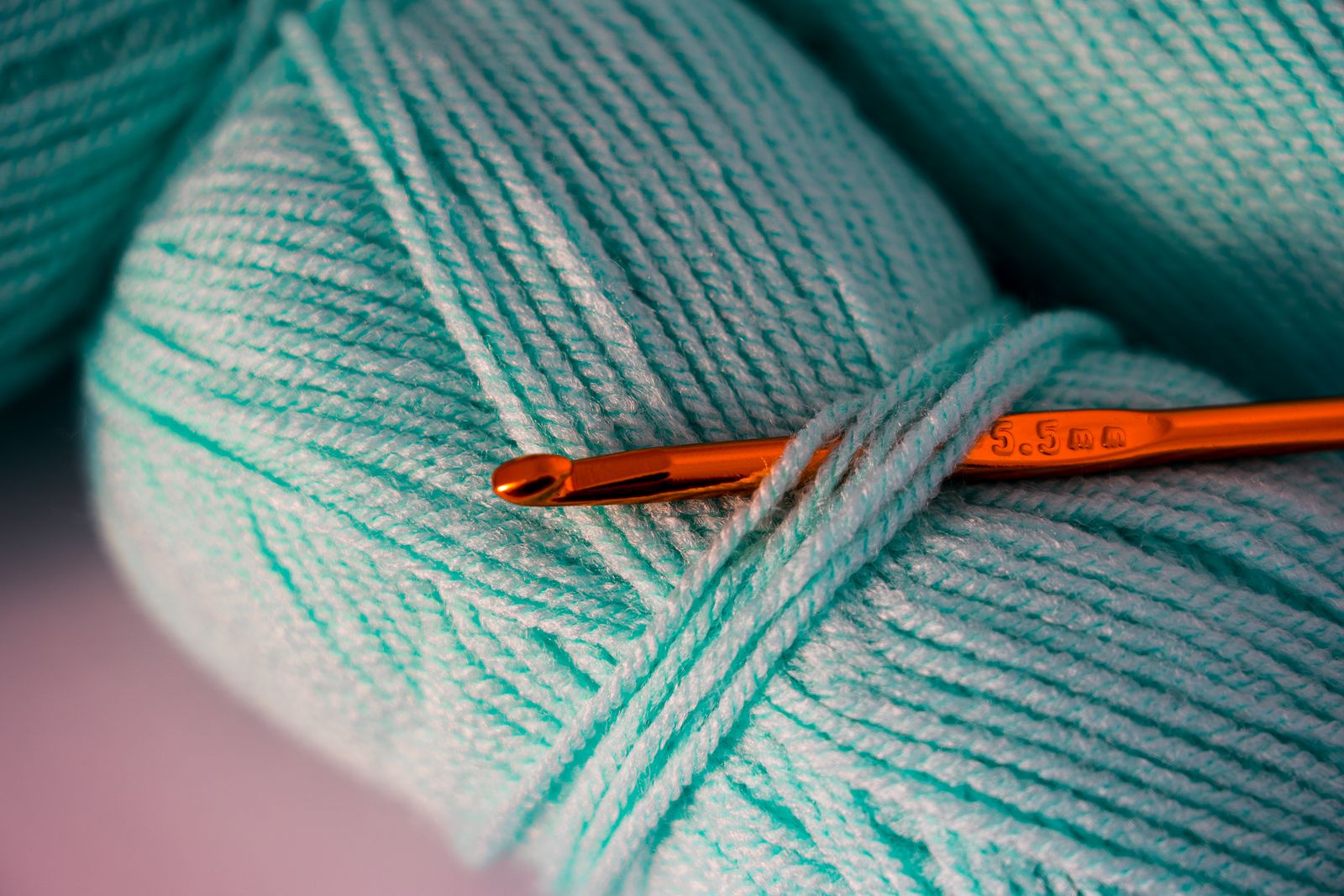
A crochet hook is the one tool you need to turn yarn into fabric, and picking the right crochet hook comes down to three things: size, material, and handle shape. Sizes run from about 2.0 mm up to 15 mm and larger, with a separate steel range near 0.6 mm to 3.5 mm for thread work. The size has to match your yarn weight and the gauge your pattern asks for. Material changes how the hook feels after an hour. Aluminum is fast and cheap, resin-handled ergonomic hooks ease hand strain, and bamboo grips slick yarn. Handle shape splits into inline hooks, which keep stitches even, and tapered hooks, which many people find quicker once they adjust. This guide walks through each choice, shows you two common ways to hold the hook, and lists the three sets I reach for most. By the end you will know which hook to buy first.

The parts of a crochet hook
Every hook has five parts, and knowing the names makes patterns and reviews easier to follow.
- Point: the tip that enters each stitch. A sharper point splits tight stitches more easily. A rounded point is gentler on splitty yarn.
- Throat: the shaped groove behind the point that catches the yarn and guides the loop back through.
- Shaft: the straight working section. Its diameter is the hook size, for example 5.0 mm, and it sets your stitch size.
- Thumb rest: the flat spot where most crocheters grip and rotate the hook.
- Handle: everything past the thumb rest, plain on a basic aluminum hook and padded on an ergonomic one.
I check the shaft measurement on any new hook with calipers, because the printed size near the thumb rest can wear off within a year while the shaft itself never changes.
Crochet hook sizes explained
Crochet hooks use three overlapping systems: metric millimeters, US letters and numbers, and an older UK numbering scale.
Metric is the reliable one. It measures the shaft in millimeters, so a 4.0 mm hook is 4.0 mm in every brand. US sizing pairs a letter and a number, like H-8 for 5.0 mm, but the letters drift between makers past size K. Steel hooks for thread and lace use their own scale, roughly 0.6 mm to 3.5 mm, and the numbers there run backward, so a higher steel number means a thinner hook.
For the full conversion I keep a printed crochet hook size chart taped inside my project bag, and there is a companion page on crochet hook letter sizes if you only need the US letters. To match a hook to your yarn, see crochet hook sizes and yarn weight.
Hook materials and how they change your stitching
Material affects speed, grip, and how your hand feels after an hour.
- Aluminum: smooth and fast, cheap, and the default for most sets. The thin metal handle gets uncomfortable in sessions past 30 minutes for some people.
- Ergonomic resin handle: a wide rubber or resin grip on a metal hook. It cuts hand fatigue and is the type I suggest for anyone with wrist or thumb pain. See ergonomic crochet hooks.
- Bamboo and wood: light, warm to the touch, and grippy, which helps with slick yarns like bamboo or silk blends. Fine tips can snap under hard pulling.
- Steel: only for thread crochet and fine lace, in sizes below 2.0 mm. Too fragile for regular yarn.
- Plastic and acrylic: used for jumbo sizes from 12 mm up, where a metal hook would be heavy. It flexes and creaks under thick yarn.
My daily hooks are ergonomic resin over aluminum, a switch I made three years ago after a long blanket left my thumb sore for a week.
Inline hooks vs tapered hooks
The head shape of a hook falls into one of two styles, and it changes how your stitches behave.
Inline hooks, like the Susan Bates line, have a point flush with the shaft and a deeper throat. Stitches come out even and the yarn splits less. Tapered hooks, like Boye and Clover, have a rounded head set slightly off the shaft and a shallower throat. They slide into stitches faster once you adjust.
Beginners often split strands with tapered hooks at first. I learned on a tapered Boye hook, moved to inline Bates for two years, then switched to tapered Clover Amour hooks because the wide handle matters more to me than the head shape. Try both if you can. Most crocheters settle on a preference within a few projects.
How to hold a crochet hook
There are two standard grips, and neither is more correct. Pick the one that keeps your wrist straight.
The knife grip has you hold the hook like a table knife, palm over the top, with the thumb rest under your fingers. It gives more power for tight stitches and stiff yarn. The pencil grip has you hold the hook like a pencil, resting it in the web between thumb and forefinger. It offers finer control for detailed work such as amigurumi.
I use the knife grip for blankets and the pencil grip for small toys, and I switch mid-project when my hand tires. For a step by step walkthrough with photos, read how to hold a crochet hook and yarn.
The crochet hook sets I recommend
After buying more hooks than I want to admit, these three sets cover almost every crocheter. Each link goes to Amazon so you can check the current price.
Clover Amour Crochet Hook Set
10 ergonomic hooks, 2.0 mm to 6.0 mm, soft resin handle
The Clover Amour is the set most crochet teachers hand new students. The tapered head is polished so yarn glides, and the color-coded handle tells you the size at a glance.
What I like
- Wide resin grip cuts thumb strain on sessions over an hour
- Color-coded by size, so I never measure a loose hook twice
- Polished tapered tip moves through stitches with almost no snag
What I do not like
- The handle is proprietary, so replacement tips from other brands do not fit
- The printed size numbers on the handle wear off after a year of heavy use
I have used my Clover Amour set almost daily for three years. The 5.0 mm hook has seen four blankets and the tip still catches yarn cleanly. For anyone buying one set to learn on and keep, this is the one I point to first.
Verdict: Best for a beginner or intermediate crocheter who wants one comfortable set for worsted and DK yarn projects.
| Hooks included | 10, sizes 2.0 mm to 6.0 mm |
|---|---|
| Handle | Soft resin, color-coded |
| Head style | Tapered |
| Price range | Around $40 for the full set |
Susan Bates Silvalume Crochet Hook Set
Aluminum inline hooks, 2.75 mm to 6.5 mm, hard case
The Susan Bates Silvalume set is the classic aluminum inline option and costs a fraction of an ergonomic set. The inline head keeps stitches even, which helps while you are still learning tension.
What I like
- Inline head splits yarn less, so my stitch count stays accurate
- Anodized aluminum is slick and fast for straight rows
- Costs under $15 for a full range of common sizes
What I do not like
- The thin metal handle is uncomfortable on sessions past 30 minutes
- The bright anodized color flakes at the thumb rest after months of use
I keep a Susan Bates 4.0 mm hook in my travel kit because I will not mind if it gets lost on a plane. The metal is cold to start but warms in the hand within a minute. For a first set, or a backup, few sets come close on price.
Verdict: Best for a new crocheter on a tight budget or anyone who wants a cheap backup set.
| Hooks included | 8, sizes 2.75 mm to 6.5 mm |
|---|---|
| Handle | Bare aluminum |
| Head style | Inline |
| Price range | Under $15 for the set |
Tulip Etimo Crochet Hook Set
Japanese hooks, cushioned grip, 2.0 mm to 6.0 mm, zip case
The Tulip Etimo is the set crocheters name when asked what they would buy if money were no object. The cushioned grip is softer than Clover resin and the tip is machined to a precise point.
What I like
- Cushioned grip is the most comfortable I have tested for hand pain
- Sharp, precise tip that I trust on tight amigurumi stitches
- Padded zip case survives being packed loose in a bag
What I do not like
- Costs around $60 for the set, roughly double a resin set
- The narrow grip is less bulky but harder to push through stiff jumbo yarn
I bought the Tulip Etimo set after arthritis started bothering my mother, and she now crochets an hour longer per day without stopping. The tip is sharper than the Clover Amour, which I like for fine cotton and dislike for loose acrylic where it can split. It is a splurge, and it earns its place if you crochet most days.
Verdict: Best for a daily crocheter or someone with arthritis or wrist pain who wants the most comfortable grip available.
| Hooks included | 8, sizes 2.0 mm to 6.0 mm |
|---|---|
| Handle | Cushioned elastomer grip |
| Head style | Slightly tapered |
| Price range | Around $60 for the set |
How to store and travel with your hooks
Loose hooks in a bag bend fine tips and go missing. A dedicated case fixes both problems.
A fabric roll or zip case with elastic loops holds each hook by size and takes up little room. For sets, the molded case from the box works until it cracks. I switched to a fabric roll after a hard case split in my bag and scattered hooks across an airport floor. See crochet hook case options, including patterns to make your own.
Flying with hooks is allowed. The TSA permits crochet hooks in carry-on bags, though I still pack metal hooks in a checked bag on international trips where rules vary by country. Full details are on can you bring crochet hooks on a plane. To square up a finished project, a set of blocking mats helps, covered in blocking crochet.

Frequently asked questions
What size crochet hook should a beginner use?
Start with a 5.0 mm hook, the US H-8 size, paired with a smooth worsted weight yarn in a light color. That combination makes your stitches easy to see and count. Most beginner patterns and yarn labels assume this size. Once you are comfortable, add a 4.0 mm and a 6.0 mm hook for the next range of patterns. I teach every new crocheter on a 5.0 mm and have never had a reason to change that.
What is the most common crochet hook size?
The 5.0 mm hook, written as H-8 in US sizing, is the size most worsted weight yarn calls for and the one used in the majority of beginner and blanket patterns. Right behind it are the 4.0 mm and 5.5 mm hooks. If you buy a 10-hook set from 2.0 mm to 6.0 mm, you will have the common sizes covered for years. I replace my 5.0 mm hook more often than any other.
Are ergonomic crochet hooks worth it?
If you crochet for more than 30 minutes at a time, yes. The wide grip spreads pressure across your hand instead of loading it onto your thumb and forefinger, which is where most crochet strain builds. A resin-handled set costs around $40, roughly triple a bare aluminum set. For occasional short projects, a plain aluminum hook is fine. I moved to ergonomic hooks after one long blanket left my thumb sore for a week.
What is the difference between inline and tapered crochet hooks?
An inline hook has its point flush with the shaft and a deep throat, which produces even stitches and splits yarn less often. A tapered hook has a rounded head set slightly off the shaft and a shallower throat, which lets it enter stitches faster once you adjust. Susan Bates makes inline hooks. Boye and Clover make tapered ones. Beginners often prefer inline for the consistency. I use tapered now but learned on inline.
Can you use any yarn with any crochet hook?
You can, but the result may not look right. Every yarn label lists a recommended hook size, usually within 0.5 mm of the ideal. Use a hook much smaller than recommended and the fabric turns stiff and slow to work. Use one much larger and the stitches gape with holes. For a reliable match, check a hook size and yarn weight chart before starting. I always make a small gauge swatch when a pattern matters.
Get the right crochet hook for your next project
The Clover Amour set covers almost every pattern I throw at it and eases hand strain. Check the current price and start stitching.