Dc 2 tog in crochet combines two double crochet stitches into one, the tallest of the common single-stitch decreases, used when a pattern needs to taper a piece worked mostly in double crochet without switching to a shorter stitch. This decrease fits garment shaping, like a raglan sleeve decrease line, where the surrounding fabric is already double crochet. This guide covers the steps and how it compares to shorter decreases.
Step-by-Step Instructions
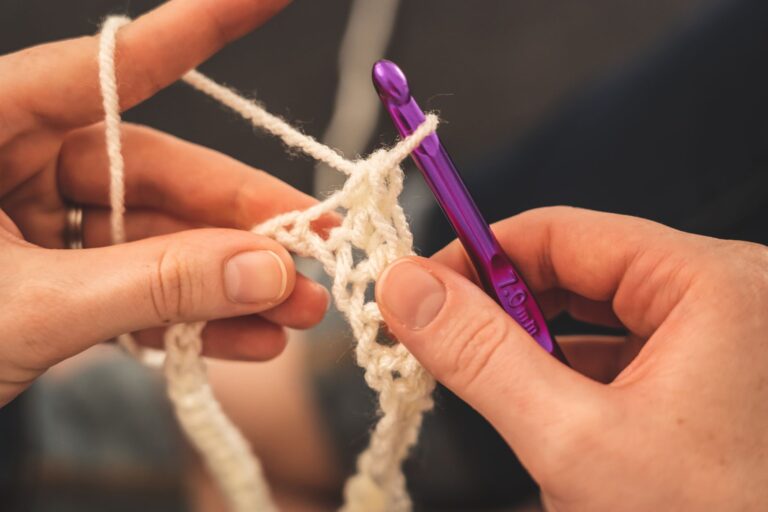
- Yarn over, insert your hook into the first stitch, yarn over, and pull up a loop. Three loops are now on your hook.
- Yarn over and pull through two of those three loops, leaving two loops on your hook.
- Yarn over again, insert your hook into the next stitch, yarn over, and pull up a loop. Four loops are now on your hook.
- Yarn over and pull through two loops, leaving three loops on your hook.
- Yarn over one final time and pull through all three remaining loops at once, completing the decrease.
This sequence takes a bit more practice to remember than a shorter single crochet decrease, since there are more intermediate loop counts to track along the way. Count out loud through the first several repetitions of any decrease you have not used recently, just to keep the loop count straight.
Worked Example
A pattern line reading dc in next 3 sts, dc2tog, dc in next 3 sts, (7) means double crochet across three stitches normally, combine the next two stitches into one with a dc2tog decrease, then continue double crocheting across the remaining three, ending with 7 total stitches from an original 8.
Related Decrease Abbreviations
- dc3tog: Combines three double crochet stitches into one instead of two, used for a steeper decrease in a single move.
- dc2tog vs. skipping a stitch: Skipping removes a stitch entirely and leaves a visible gap, while dc2tog removes a stitch without leaving a hole, since the two stitches merge at the top.

DC 2 Tog vs. Shorter Decreases
A double crochet decrease removes the same one stitch from your total count as a single crochet or half double crochet decrease would, but it does so over the taller double crochet height, meaning the visual taper happens more gradually across a row compared to a shorter stitch decrease packed into the same space. Use dc 2 tog specifically when the surrounding fabric is worked in double crochet, since mixing decrease heights with the surrounding stitch height creates a visible bump or dent in the fabric.
Frequently asked questions
What is the UK equivalent of dc 2 tog?
In UK terminology, the same decrease is written as tr2tog, since UK patterns call the US double crochet stitch a treble crochet. The technique itself is identical between the two systems.
Why does dc 2 tog have more steps than sc2tog?
Double crochet itself involves more yarn overs and pull-throughs than single crochet, so combining two double crochet stitches naturally carries more intermediate steps than combining two shorter single crochet stitches.
Can I use dc2tog to shape a garment armhole?
Yes, dc2tog is a common choice for armhole and raglan shaping in double crochet garments, since it keeps the decrease stitch height consistent with the surrounding fabric for a smooth, even taper.
Want the shorter decrease versions too?
See sc2tog and hdc2tog compared side by side.
See the hdc decrease guide