
How to say crochet in Spanish has a straightforward core answer, “crochet” itself is commonly used and understood across most Spanish-speaking regions, alongside “tejido a crochet” or “ganchillo” depending on the specific country and regional dialect. I get this exact question from readers navigating between English and Spanish crochet resources, and the honest answer involves a bit of regional variation worth understanding. This guide covers the main terms and where each is most common.
The Main Terms
“Crochet” is used directly, borrowed from the original French-derived English word, and is widely understood across Latin America and Spain alike, especially in casual conversation and online content. “Ganchillo,” derived from “gancho” meaning hook, is the more traditionally Spanish-derived term, especially common in Spain itself. “Tejido a crochet” or simply “tejer a crochet” literally translates to “knitted with crochet” or “to knit with crochet,” a phrase that uses the broader Spanish word for handcraft knitting or weaving, “tejer,” combined with “crochet” to specify the technique.
Regional Variation
| Region | Most common term |
|---|---|
| Spain | Ganchillo |
| Mexico and Central America | Crochet or tejido a crochet |
| South America (varies by country) | Crochet, with some regional use of ganchillo |
This regional variation means searching for patterns or resources in Spanish benefits from trying more than one term, since a resource written by a Spanish author might use “ganchillo” exclusively, while a Mexican or South American resource more often defaults to “crochet” directly.
How This Differs from Spanish Knitting Vocabulary
Spanish distinguishes crochet from knitting more clearly than English sometimes does in casual speech, using “tejer a crochet” or “ganchillo” for crochet specifically, and “tejer a dos agujas,” literally “knitting with two needles,” for knitting. This distinction matters when searching for patterns, since conflating the two terms in a search can surface irrelevant results for the wrong craft entirely.
Useful Related Vocabulary
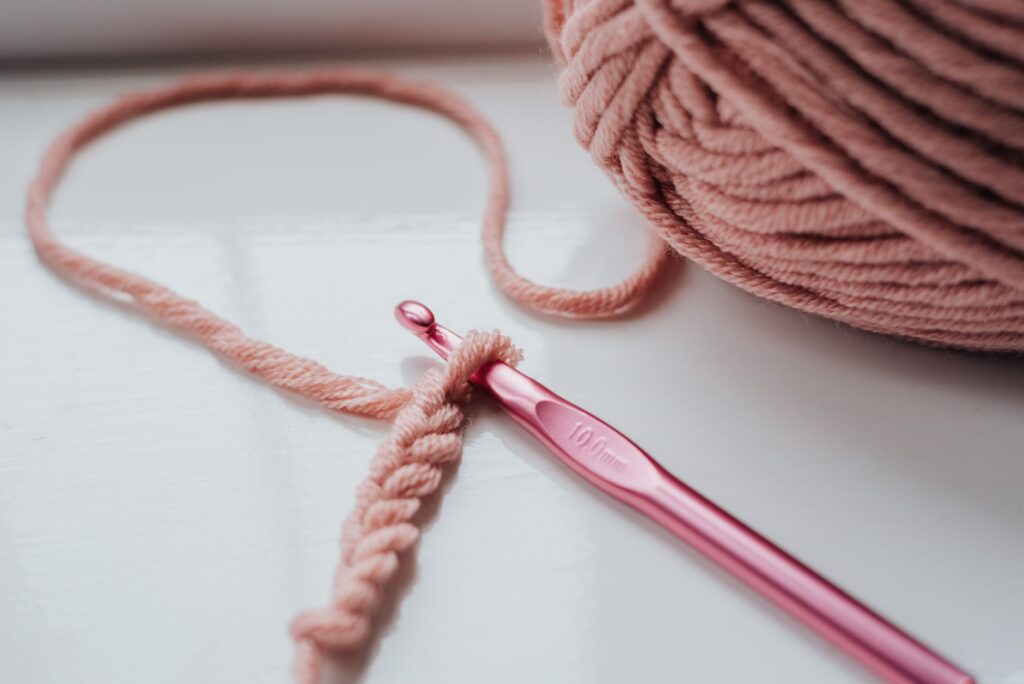
“Aguja de crochet” or “gancho” both refer to the crochet hook itself. “Hilo” or “estambre” refer to yarn or thread, with “estambre” more common in Mexico specifically for yarn, while “hilo” is used more broadly, including for finer crochet thread.
Common Phrases for Searching Spanish Patterns
“Patron de crochet” means crochet pattern, and “tutorial de crochet” or “clase de crochet” both refer to a tutorial or lesson. “Punto bajo” and “punto alto” are the Spanish terms for single crochet and double crochet respectively, worth knowing when reading any Spanish-language pattern instructions directly.
Frequently asked questions
Is ganchillo or crochet more commonly used?
It depends on the region. Ganchillo is especially common in Spain, while crochet used directly is more common across much of Latin America, though both terms are generally understood across Spanish-speaking regions.
What is the Spanish word for a crochet hook?
Both “gancho” and “aguja de crochet” are used to refer to the crochet hook, with “gancho” being the more general word for hook.
Quieres ver una guia paso a paso en espanol?
Sigue una guia completa para empezar a tejer a crochet.
Ver la guia paso a paso