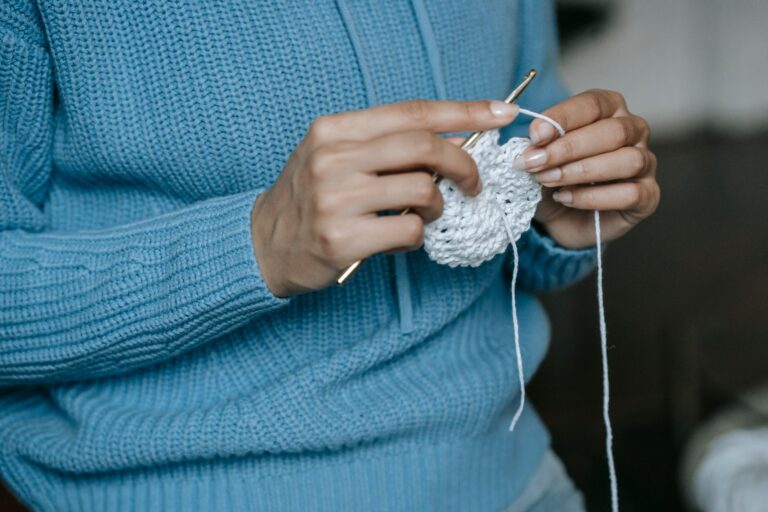
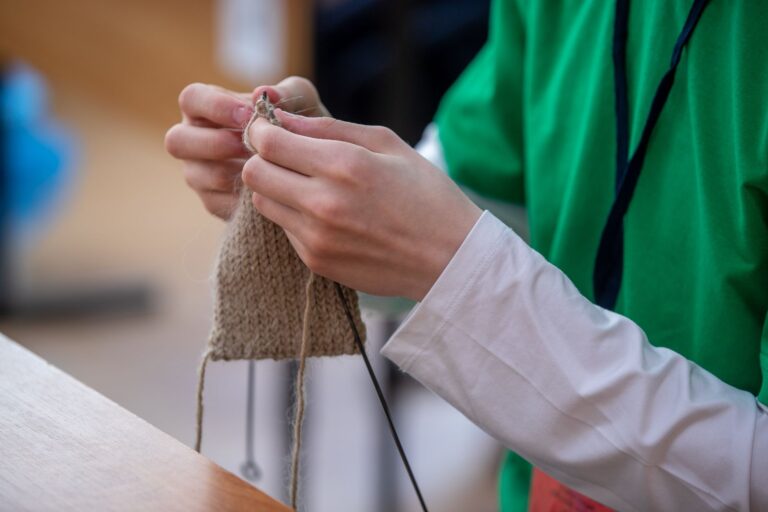
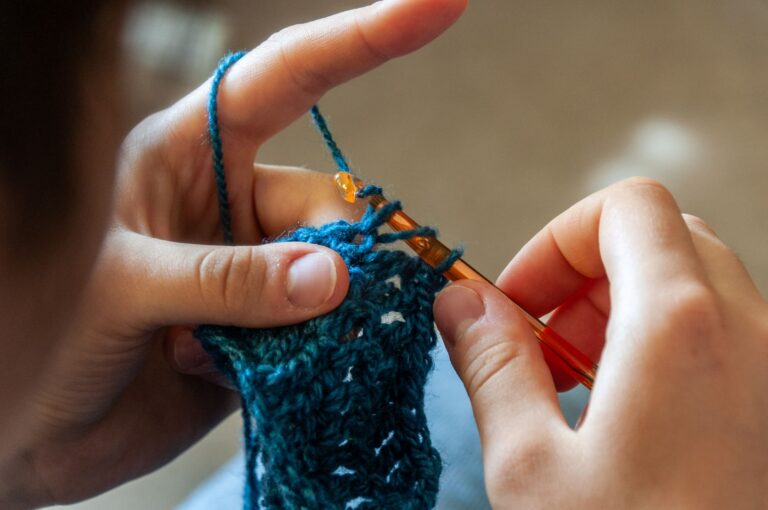
The wrong side in crochet is the face of your fabric where the turning chain bumps and stitch tops look less tidy than the front, and mixing it up mid project creates a visible seam of mismatched rows. Flipping sides partway through, say on row 12 of a scarf, can mean ripping back nearly an hour of work. Learning to spot the wrong side takes about 3 rows of practice once you know what to look for.

Step-by-Step Instructions
- Lay your work flat and look at the row of V shaped stitches across the top
- On the right side, the V stitches sit cleanly in a row with little texture behind them
- Flip to the other face and look for a horizontal bar or bump under each V, this is the wrong side
- Mark the right side with a small stitch marker or safety pin in the corner so you never lose track again
Clip a marker onto the right side corner the moment you start a project. It saves a lot of redone rows.
Double crochet and taller stitches make the wrong side easier to spot than single crochet does, since the bar behind each V stands out more clearly. Turn your work under a bright lamp the first few times you check, since shadows in dim light can make both sides look identical.
Common Mistakes
Losing track of sides usually happens for one of these reasons.
- Working in the dark or under dim light where the bumps are hard to see
- Setting a project down mid row and picking it back up on the wrong end
- Working in a stitch pattern like single crochet where both sides look nearly identical at a glance
- Switching projects mid session and forgetting which one had its right side already marked
Frequently asked questions
Does the turning chain count as a stitch when checking sides?
The turning chain itself does not tell you which side is which, but it does leave a small bump that shows up more clearly on the wrong side in taller stitches like double crochet. In single crochet the difference is subtler, so a stitch marker on the right side corner is the more reliable method.
Does it matter which side faces out on a finished project?
For most projects, yes, the right side is meant to face outward since that is where the pattern designer expected the cleaner stitch definition to show. A few textured stitches, like reversible granny squares, look intentional on either side, so check your specific pattern notes.
Can I fix a project where I mixed up the sides partway through?
Often yes, if the mismatch is only a row or two, since ripping back to the switch point and re-marking the correct side usually resolves it. Fixing this mistake can mean frogging as many as 6 rows on a blanket square.
Keep your rows consistent
Marking your right side early prevents the mismatched look that comes from flipping mid project. Next, check our guide on the yarn over motion to keep your stitch tops looking uniform row after row.
Read the yarn over guide