
How to reduce crochet curling starts with identifying why your flat piece is cupping in the first place, which is almost always tension, stitch choice, or a missing blocking step. I have fixed curling dishcloths and scarves more times than I can count, and the fix is rarely as complicated as it looks. This guide covers the most common causes first, then gives you an ordered list of fixes to try, starting with the one that solves the problem most often.
Direct Answer
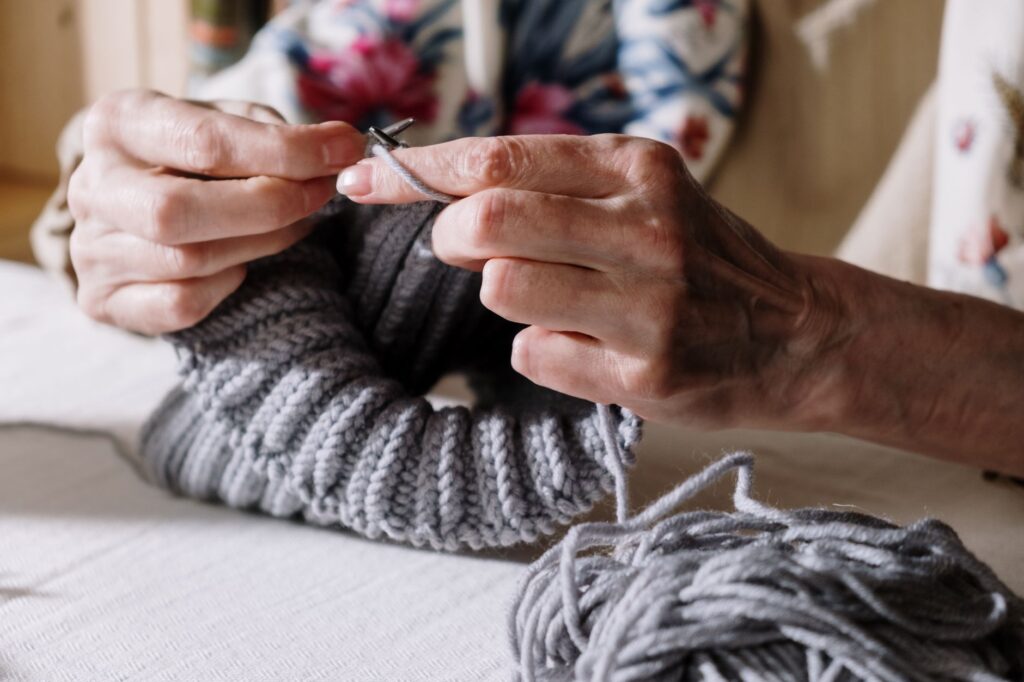
Crochet curls when your tension is tighter on one edge than the other, or when a stitch pattern like plain single crochet naturally pulls fabric into a curve. In my experience, blocking almost always flattens a piece that curls only from tension, while a stitch-pattern curl needs a border round or a different stitch choice entirely.
Common Causes of Curling
I run through this list myself any time a new piece comes off the hook looking cupped.
- Uneven tension: Tighter stitches on one side pull the fabric toward that edge.
- Stitch pattern: Flat single crochet pieces are especially prone to curling because the stitch is shorter and denser than double crochet.
- Wrong gauge: Using a hook one or two sizes too small for your yarn creates a stiff fabric that cups at the edges.
- No blocking: Skipping a wet or steam block leaves the natural curl of the yarn fiber in place.
How to Fix It
- Wet block the piece first. Soak it in cool water, squeeze out excess, then pin it flat to dry on a towel or blocking mat.
- If blocking alone does not hold, switch your hook up half a size to loosen the overall gauge.
- Add a border round of single crochet or a simple shell stitch around the whole edge, which locks the outer stitches in place and stops re-curling after washing.
I reach for the border round fix most often, since it works even on pieces I have already finished and does not require reworking the whole project.
Frequently asked questions
Is crochet harder than knitting?
Neither craft is harder overall, but crochet is generally easier to learn in the first week since a dropped loop is simpler to fix with a single hook than with two knitting needles. Knitting tends to produce flatter fabric naturally, which is part of why crochet pieces curl more often without blocking.
Does curling mean I am doing something wrong?
Not necessarily. Some curling is a normal property of single crochet fabric and happens even to experienced crocheters, especially on a first flat swatch before blocking. Only worry if the curl remains after a proper wet block, which usually points to a gauge or tension issue worth adjusting.
Will blocking fix curling permanently?
Blocking usually holds through several gentle washes, but repeated machine washing can relax the fibers back toward their natural curl over time. A border round of stitches gives a longer-lasting fix than blocking alone, since it changes the structure of the edge rather than just reshaping it temporarily.
Want to avoid curling from the start?
Choosing the right stitch pattern for flat pieces prevents most curling before it starts.
See beginner-friendly flat patterns