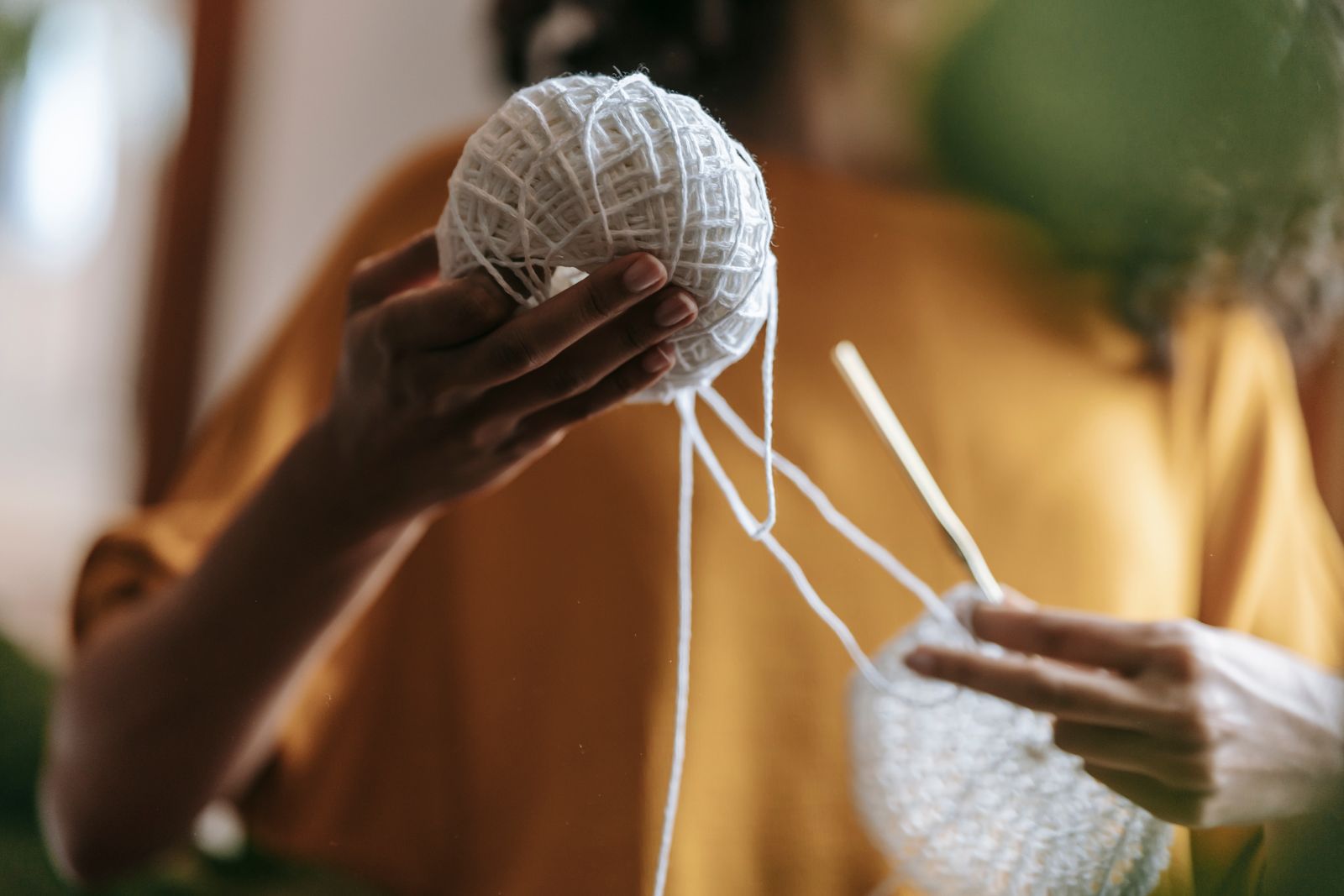
Matching a crochet hook to your yarn starts with the suggested size printed on the yarn label, then adjusts from there based on your own tension. Treat the label as a starting point, not a rule, since crocheters who work tighter than average often need to size up half a step.

Why the label is only a starting point
Yarn labels print a suggested hook size based on an average tension that may not match yours at all. Tight stitches are a common reason a first blanket comes out several inches smaller than the pattern promised.
How to check the match yourself
Crochet a small swatch, measure your stitches per inch, and compare it to the pattern’s gauge before committing to a full project. If your swatch is too dense, size up; if it is too loose, size down.
- Too tight or stiff: try a hook one size larger.
- Too loose or holey: try a hook one size smaller.
- Matches gauge: you have the right pairing for this project.

Frequently asked questions
Does the hook size on the yarn label always matter?
It matters as a starting point, but your own gauge swatch should always override the label if a project needs to fit specific measurements.
What happens if I use the wrong hook size for my yarn?
The fabric comes out too dense or too loose and open, and a garment can end up the wrong finished size even if the stitch count matches the pattern.
See the full hook size chart
Compare every mm, US, and UK size against common yarn weights.