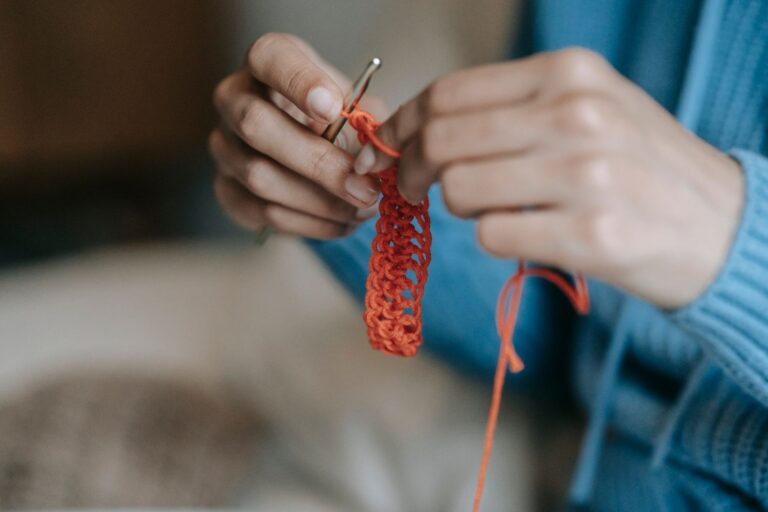
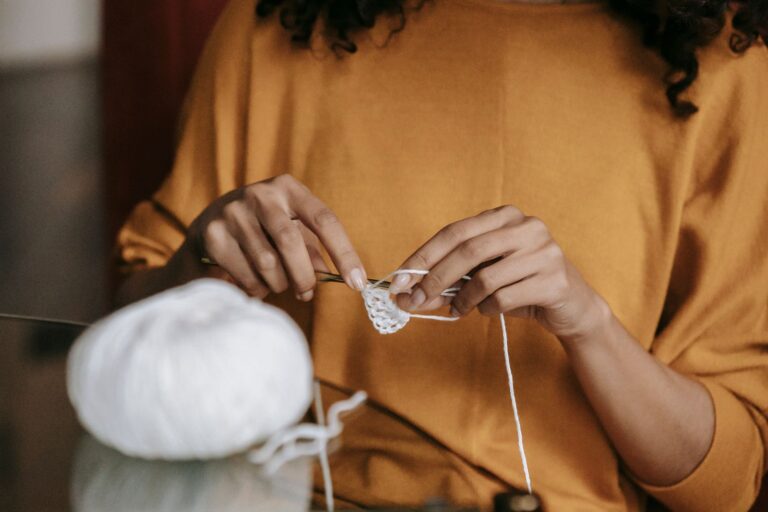
There is no single correct way to hold a crochet hook – the two standard methods, pencil grip and knife grip, both work well, and most crocheters eventually settle on whichever one feels natural after some practice. The pencil grip holds the hook like a pencil, thumb and index finger pinched near the thumb rest; the knife grip holds it in your fist like a knife, with the shaft angled down and across your palm. This guide walks through both grips step by step, helps you decide which to try first, and covers the common mistakes that cause hand fatigue or uneven tension. By the end, you’ll be able to hold a crochet hook comfortably and start building consistent stitches.
The Pencil Grip
The pencil grip holds a crochet hook the same way you’d hold a pencil for writing, and it’s the grip most beginner tutorials teach first.
- Rest the hook along the top of your hand, with the shaft lying across the base of your fingers.
- Pinch the hook between your thumb and index finger, right where the flat thumb rest sits on most hooks.
- Let your middle finger rest lightly against the shaft below your index finger for extra control.
- Keep your ring and little fingers loosely curled – they support your hand’s position but shouldn’t grip the hook itself.
- Angle the hook’s tip slightly downward toward your work, the same angle you’d naturally hold a pen on paper.
The pencil grip tends to feel intuitive to new crocheters because the hand position is already familiar from handwriting, which is part of why most beginner tutorials teach it first.
The Knife Grip
The knife grip holds a crochet hook the way you’d hold a knife for cutting, with the whole handle inside your fist rather than pinched between two fingers.
- Wrap your fingers around the hook’s handle as if making a loose fist, with your palm facing down toward your work.
- Position your thumb along the flat thumb rest of the hook for stability and control.
- Angle the shaft down and across your work, rather than pointing straight ahead.
- Keep your wrist relatively relaxed and let the motion of the stitches come from small wrist and finger movements, not your whole arm.
- Adjust your grip slightly looser than feels natural at first – a tight fist grip is the most common cause of hand fatigue with this method.
Many crocheters who work with heavier or larger hooks, especially jumbo sizes, find the knife grip gives them more leverage and control than the pencil grip does at that scale.
Which Grip Is Right for You
Neither grip is objectively correct, and switching between them while you’re learning is completely normal rather than a sign you’re doing something wrong. Many crocheters try both in their first few projects and land on a preference once their hands and stitches settle into a rhythm. As a general starting point, the pencil grip tends to suit finer hooks and detailed work, while the knife grip is often preferred once you move to larger or heavier hooks, though this is a tendency rather than a rule.
If you’re left-handed, both grips work exactly the same way, just mirrored – hold the hook in your left hand and work from left to right instead of right to left, following whichever grip’s finger placement feels most natural to you. There’s no separate left-handed grip to learn beyond that mirroring.
Common Mistakes When Holding a Crochet Hook
- Gripping too tightly: a white-knuckle grip is the single biggest cause of hand and wrist fatigue during long crochet sessions – aim for a grip that’s secure but relaxed.
- Holding too far from the tip: gripping too high up the shaft, away from the working end, makes it harder to control stitch tension and see your work clearly.
- Switching grip mid-row without noticing: shifting your hand position inconsistently changes tension from stitch to stitch, which shows up as uneven fabric.
- Locking your wrist: stiff, locked wrist movement forces the work into your whole arm and shoulder, which tires you out faster than small, relaxed finger and wrist motions.
Frequently asked questions
What is the correct way to hold a crochet hook?
There is no single correct way – the pencil grip and knife grip are both standard methods. The real goal is comfort and consistent tension, not matching one specific hand position exactly.
Is pencil grip or knife grip better?
Neither is objectively better. Pencil grip is often more common for beginners and fine work, while knife grip is frequently preferred for larger or heavier hooks, but both are equally valid choices.
How do I stop my hand from hurting when holding a crochet hook?
Loosen your grip, take regular breaks, and check that you aren’t gripping too far from the hook’s tip. If pain persists, an ergonomic hook with a cushioned handle can meaningfully ease hand fatigue.
Is holding a crochet hook different for left-handed crocheters?
No fundamentally different technique is required – left-handed crocheters use the same pencil or knife grip, simply mirrored, holding the hook in the left hand and working in the opposite direction.
Next Steps
This page covers holding the hook itself – for the two-handed technique of managing the hook and your working yarn together, see our how to hold a crochet hook and yarn guide. However you hold your hook, comfort and consistent tension matter more than matching anyone else’s exact grip. If your hands tire quickly even with a relaxed grip, our ergonomic crochet hooks guide covers hook options built specifically to ease hand fatigue. And if you’re just getting your first hook, see our beginner crochet needle guide for size, material, and grip picks, or head back to the crochet hooks hub.