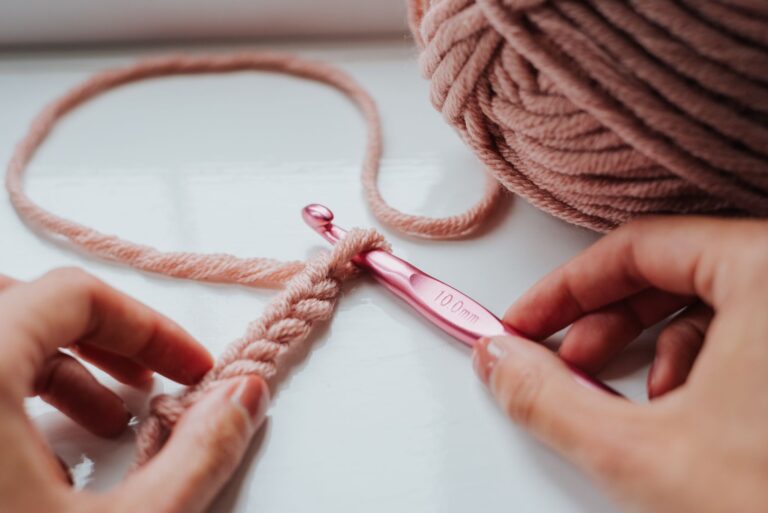
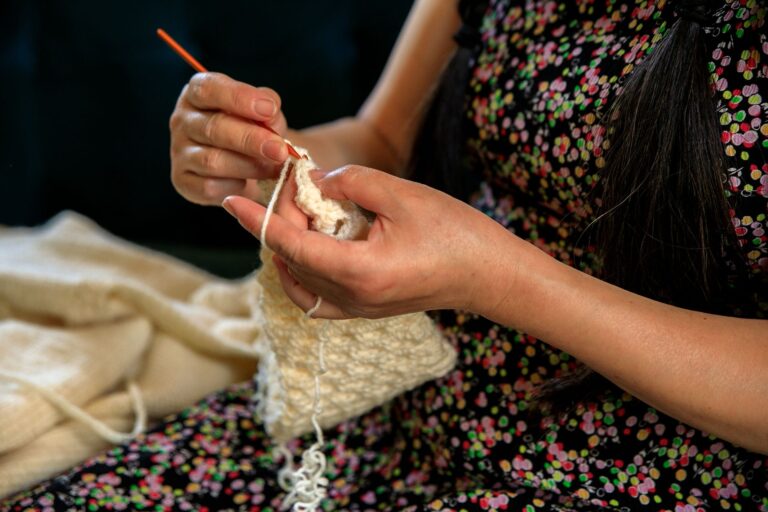
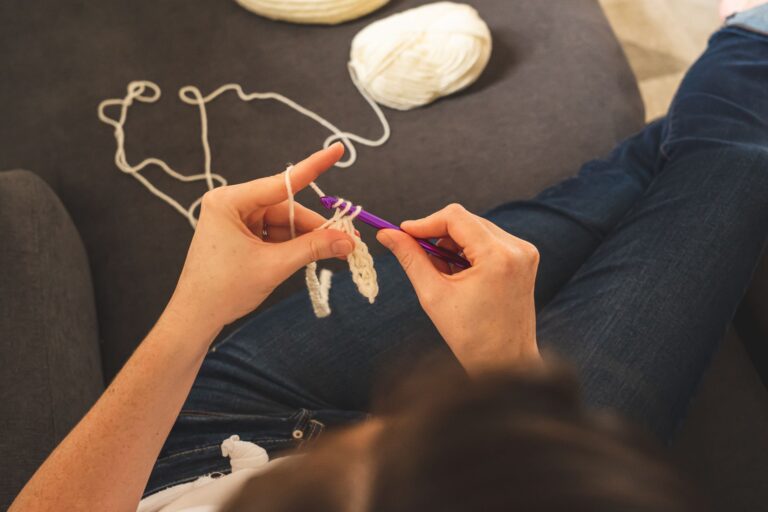
How to sew in ends crochet describes the finishing step of threading loose yarn tails through a yarn needle and stitching them securely into nearby fabric so they stay hidden and do not work loose with washing or handling. Treat this as its own dedicated stage of every project, since rushing it is the single most common reason a finished piece starts unraveling within the first few weeks. This guide covers the full needle technique, variations by fabric density, and the specific mistakes that let a tail work back loose.

What You Will Need
- A yarn needle with an eye sized appropriately for your yarn weight
- Small sharp scissors for trimming
- Your finished piece with tails left at least 6 inches long
Step-by-Step Instructions
- Thread the loose tail onto your yarn needle.
- Weave the needle through the back loops of several nearby stitches, following the same direction as the stitches rather than cutting straight across at an angle.
- Continue weaving for about 2 inches through consistent stitches.
- Reverse direction and weave back through a different set of stitch loops for another inch, creating a path that doubles back on itself.
- This direction change is what locks the tail in place, since the yarn cannot simply pull straight back out through a path that changes direction partway through.
- Trim the remaining tail close to the fabric, leaving no more than a quarter inch showing.
- Gently stretch the fabric in that area to check the tail stays hidden and does not pop back through under tension.
Variations by Fabric Density
Dense stitches like single crochet hide a woven tail easily and hold it securely with a relatively short weave. Open, lacy stitch patterns offer less fabric to hide a tail inside, so weave through the denser post of a stitch rather than through an open chain space, and consider extending your weave length slightly for extra security on very open work.
Cotton grips a woven tail securely with a shorter weave than a slippery fiber needs, while slippery yarns like bamboo, silk blends, or some synthetic novelty yarns genuinely benefit from the full reverse-direction weave described above, since they can work loose from a shorter, single-direction weave over time.
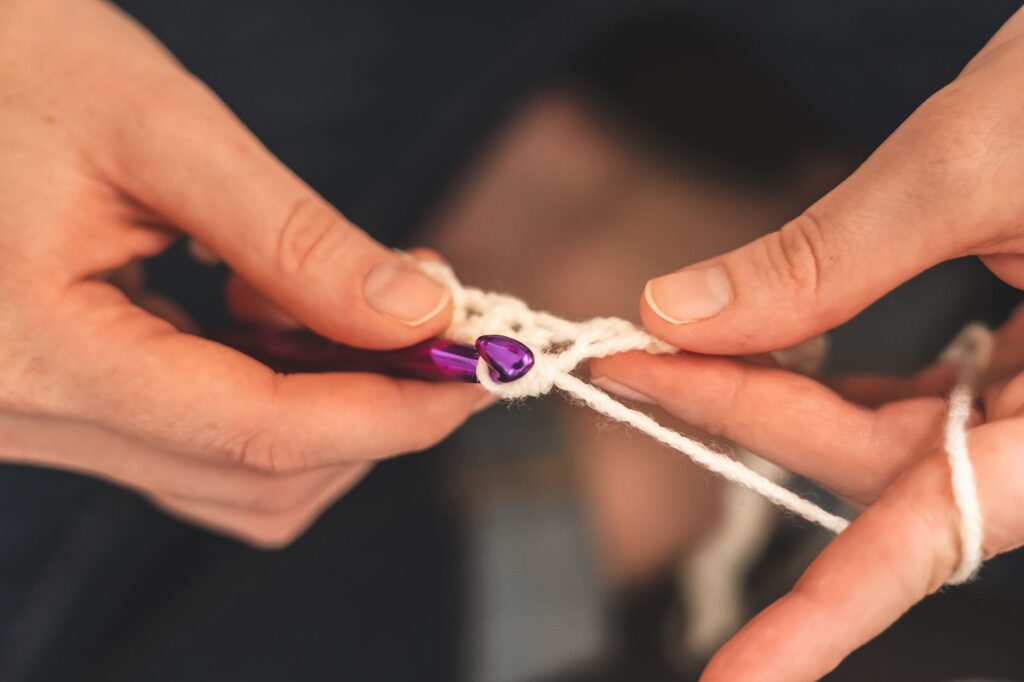
Common Mistakes That Let a Tail Work Loose
- Weaving in only one direction: A single-direction weave with no reversal is far more likely to pull straight back out under repeated stretching than a two-direction weave.
- Trimming too short before confirming security: Cutting the tail immediately after weaving, before stretching the fabric to test it, risks trimming a tail that was not actually secure.
- Weaving diagonally across the fabric: A diagonal path is more likely to show as a faint visible line on the right side, especially on thinner or lighter-colored fabric.
Choosing the Right Needle
A blunt-tip yarn needle, sometimes called a tapestry needle, is strongly preferred over a sharp sewing needle for weaving in ends, since a blunt tip slides between stitch loops rather than splitting the yarn fibers themselves, which weakens the fabric at that point. Keep a small set of yarn needles in a few different eye sizes to match different yarn weights, since a needle with too small an eye makes threading bulky yarn frustrating and slow.
Bent-tip needles, curved slightly along their length, can make weaving through dense fabric like a tightly worked amigurumi easier than a straight needle, since the curve follows the natural path between stitches more comfortably.
At least 6 inches gives enough length to weave in both directions securely. A shorter tail is harder to weave in cleanly and more likely to slip loose over time.