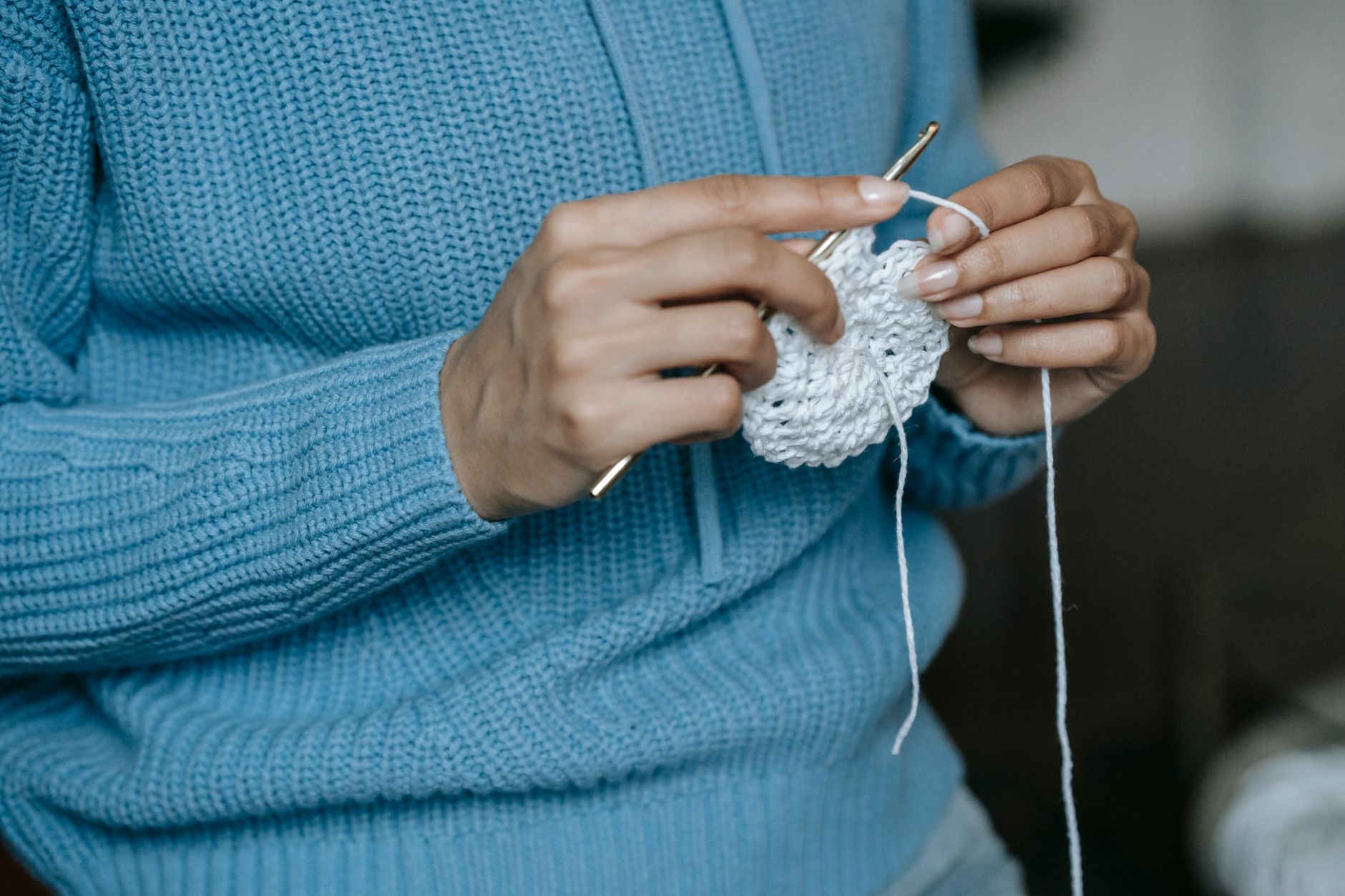
Crochet how to turn covers the exact chain height and counting rule needed at the end of every row, a detail that changes depending on which stitch you are working and trips up more beginners than almost any other single technique. I still remember spending an entire early project confused about why my rectangle kept growing narrower on one side, and the answer turned out to be a turning chain mistake I was repeating every single row. This guide walks through every common stitch height, gives worked examples for each, and covers the specific troubleshooting steps for when your turn goes wrong.
Why Turning Chains Exist at All
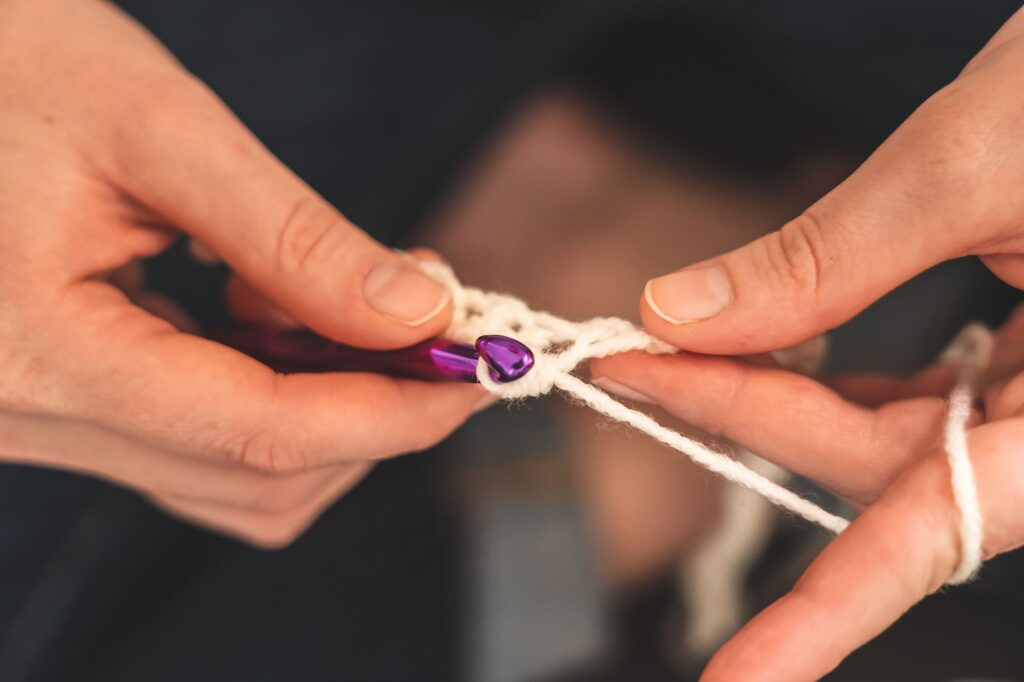
Every stitch beyond the shortest single crochet has some height, and your work needs to rise to match that height at the start of a new row, or the first stitch of the row would sit lower than the rest and pull the fabric out of shape. The turning chain solves this by building a small chain “stand-in” for the height of the first stitch before you actually work into the row below.
Turning Chain Height by Stitch Type
| Stitch | Turning chain height | Counts as first stitch? |
|---|---|---|
| Single crochet (sc) | Chain 1 | No |
| Half double crochet (hdc) | Chain 2 | Usually yes |
| Double crochet (dc) | Chain 3 | Yes |
| Treble crochet (tr) | Chain 4 | Yes |
This table is the single most useful reference to memorize early, since nearly every turning mistake traces back to applying the wrong row’s rule to a different stitch.
Worked Example: Single Crochet Turn
- Complete the last single crochet stitch of your row.
- Chain 1. This chain does not count as a stitch.
- Turn your work.
- Insert your hook into the very first stitch of the row below, the actual stitch, not the chain space, and single crochet as normal.
Worked Example: Double Crochet Turn
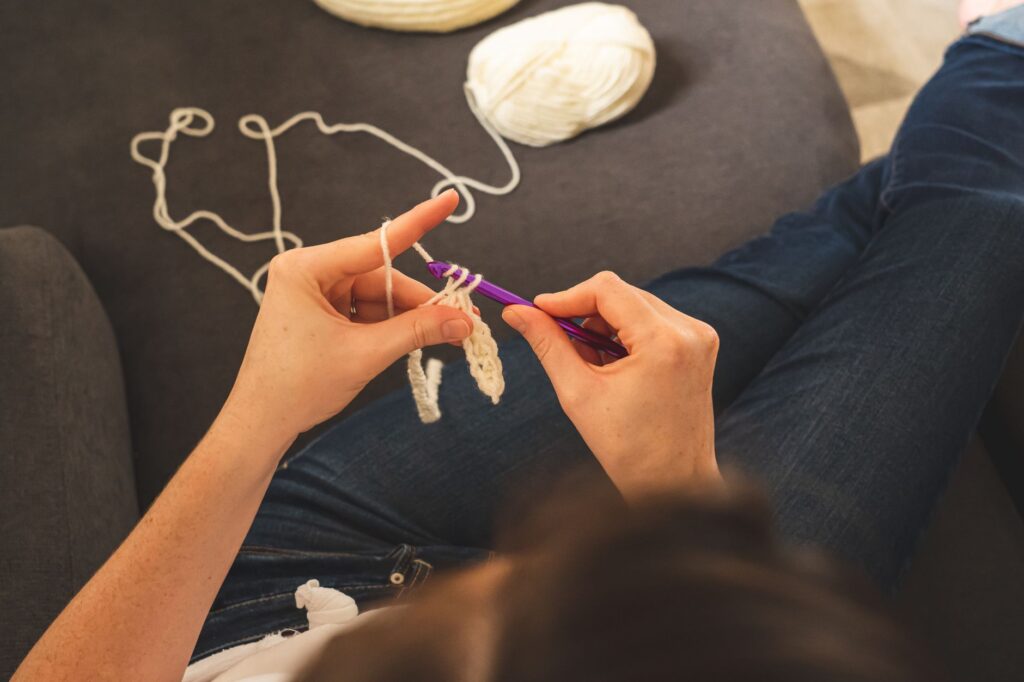
- Complete the last double crochet stitch of your row.
- Chain 3. This chain counts as your first double crochet stitch of the new row.
- Turn your work.
- Skip the first actual stitch of the row below, since the turning chain already stands in for it, and work your next double crochet into the second stitch instead.
- At the end of the row, work your final double crochet into the top of the previous row’s turning chain, treating it as a regular stitch.
Troubleshooting Turning Problems
- Your fabric grows narrower on one edge: This usually means you are skipping the actual first stitch on rows where the turning chain should not count, effectively losing a stitch every row on that side.
- Your fabric grows wider on one edge: This often means you are treating a non-counting turning chain, like single crochet’s, as though it counts, adding an extra unintended stitch.
- A visible gap or hole appears at the turn: A turning chain worked too loosely can leave a small gap at the edge. Keep your turning chain tension consistent with your regular stitch tension.
- The last stitch of a row keeps disappearing: The final stitch, often worked into the top of the previous row’s turning chain, is easy to miss visually. Look specifically for the turning chain’s top loops at the end of every row before moving on.
UK Terminology Adds Another Layer
If you are working from a UK-written pattern, remember that UK single crochet is called double crochet, and UK double crochet is called treble crochet, which means the turning chain heights in the table above shift by one row if you accidentally apply US names to a UK pattern. Always confirm which terminology system a pattern uses before applying any turning chain rule, since assuming the wrong system compounds with the turning chain confusion already covered above.
No, it depends on the stitch. Single crochet’s turning chain never counts as a stitch, while half double crochet, double crochet, and taller stitches typically do count their turning chain as the first stitch of the row.