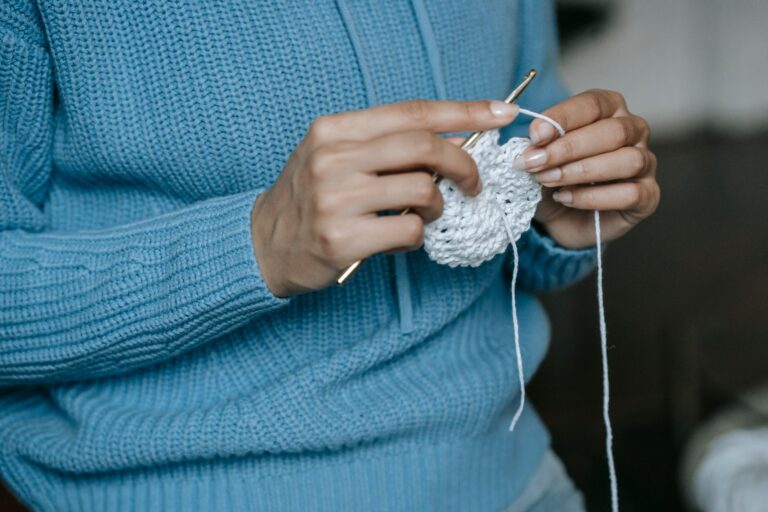
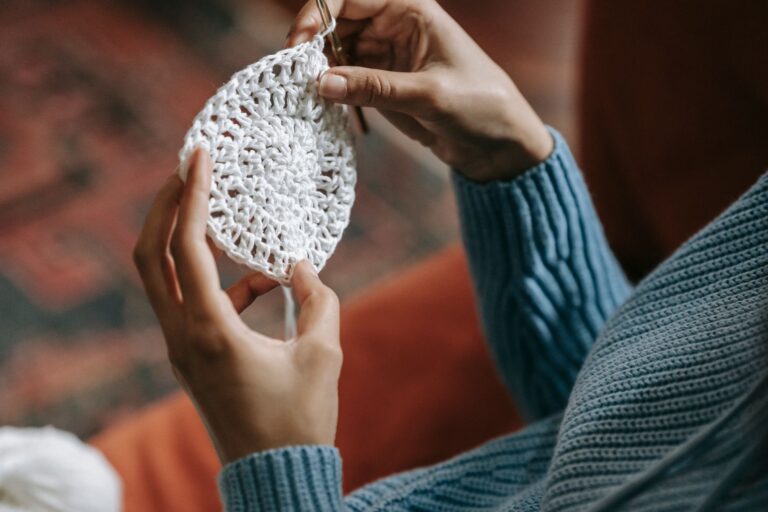
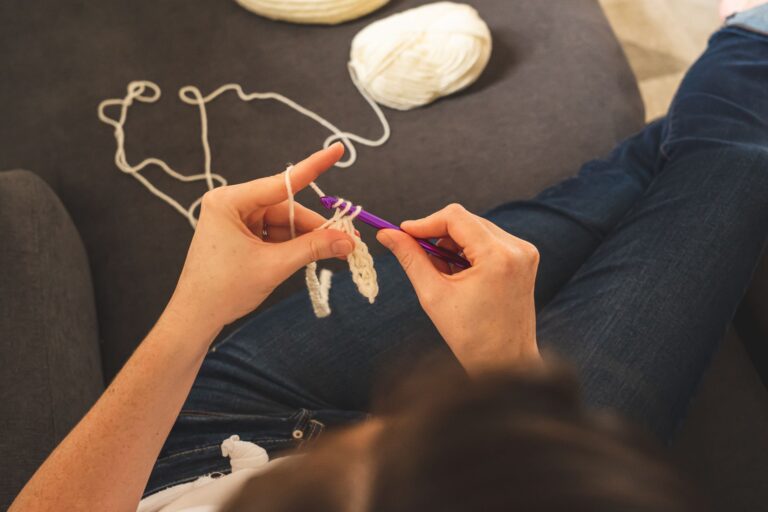
How crochet works, at its most conceptual level, comes down to pulling loops of yarn through other loops using a single hook, building up interlocking fabric one stitch at a time with no more than a couple of active loops on the hook at any given moment. I like starting with this bird’s-eye explanation before diving into any specific stitch, since understanding the underlying logic makes every individual stitch feel like a variation on one idea rather than a completely separate thing to memorize. This guide covers that core concept, then how it scales into a real finished project.
The Core Mechanical Idea
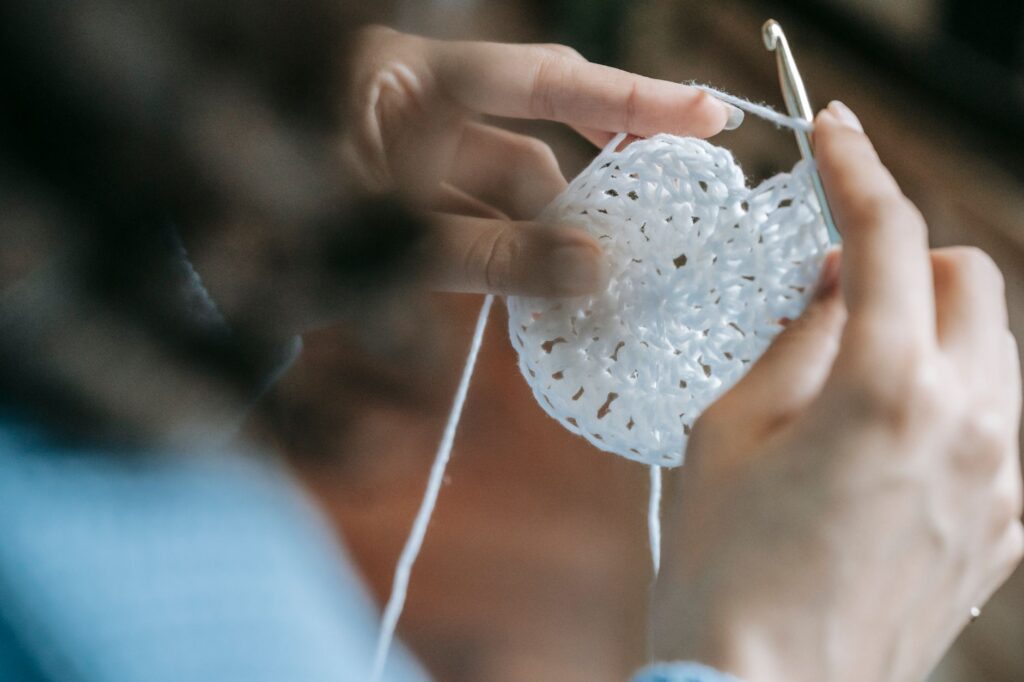
Every crochet stitch follows the same basic pattern: insert the hook somewhere, wrap yarn around the hook, pull that wrapped yarn back through, and repeat that wrap-and-pull motion a specific number of times to complete one stitch. Taller stitches, like double or treble crochet, simply repeat the wrap-and-pull motion more times per stitch than a shorter stitch like single crochet does, which is the entire mechanical difference behind why some stitches produce taller fabric than others.
From a Single Stitch to a Row
Once you can complete one stitch, a row is simply that same stitch repeated across a foundation chain, moving to a new position each time. The chain itself follows the identical wrap-and-pull logic, just without inserting into any prior fabric, since it is building the very first foundation the rest of the project will attach to.
From a Row to a Full Fabric
Stacking multiple rows on top of each other, turning your work between each one, builds up a two-dimensional piece of fabric. Working in a circle instead of flat rows, inserting each new round’s stitches into the previous round rather than turning back and forth, builds a three-dimensional or flat circular shape instead, depending on whether you increase your stitch count each round.

Why This Mental Model Helps
Framing every crochet technique as a variation on “insert, wrap, pull, repeat” makes learning a new stitch feel less like memorizing an unrelated new skill and more like adjusting a familiar formula. Increases and decreases, for instance, are really just working that same core motion either twice into one spot or combining two spots into one pull-through, rather than a fundamentally different technique.
What You Need to Actually Try It
A single hook and a length of yarn are genuinely all the physical tools crochet requires, unlike knitting’s two needles or weaving’s loom setup, which is part of why the craft has such a low barrier to a first attempt. The learning curve lives entirely in developing comfortable, consistent hand tension and motion, not in acquiring or setting up complicated equipment.
Frequently asked questions
What is the single most basic idea behind how crochet works?
Pulling a loop of yarn through another loop using a hook, repeated in a specific pattern, is the core mechanical idea behind every crochet stitch, from the simplest chain to the most complex textured pattern.
Why do taller stitches like double crochet take more steps than single crochet?
Taller stitches repeat the same wrap-and-pull motion more times per stitch, which is the entire mechanical reason they produce taller fabric than a shorter stitch using fewer repetitions.
Ready to try your first actual stitch?
See the complete beginner walkthrough from slip knot through your first row.
Learn how to make crochet