How to do the second row of crochet is often easier to learn through a detailed description of exactly what your hands and hook should be doing at each moment, rather than abstract counting rules alone, especially for people who learn best by visualizing a physical motion. This kind of detailed physical description helps when the standard instructions “make sense” but do not translate into your actual hands. This guide walks through the second row focusing specifically on hand position and physical motion.
What Your Hands Look Like at the End of Row One
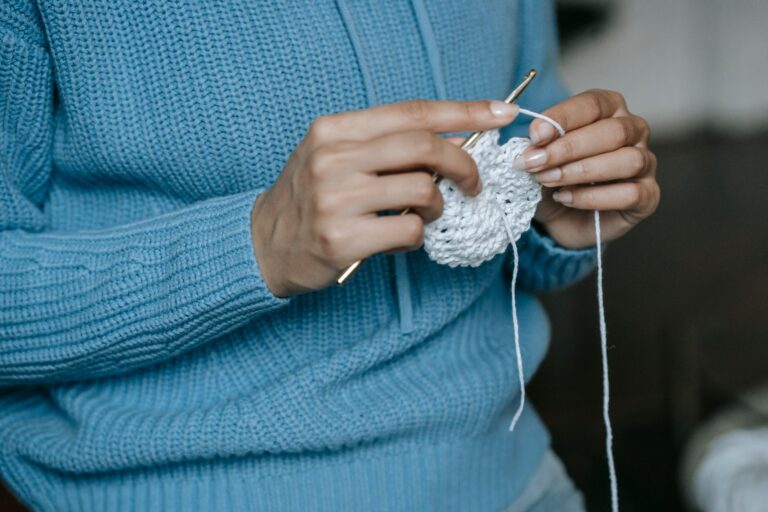
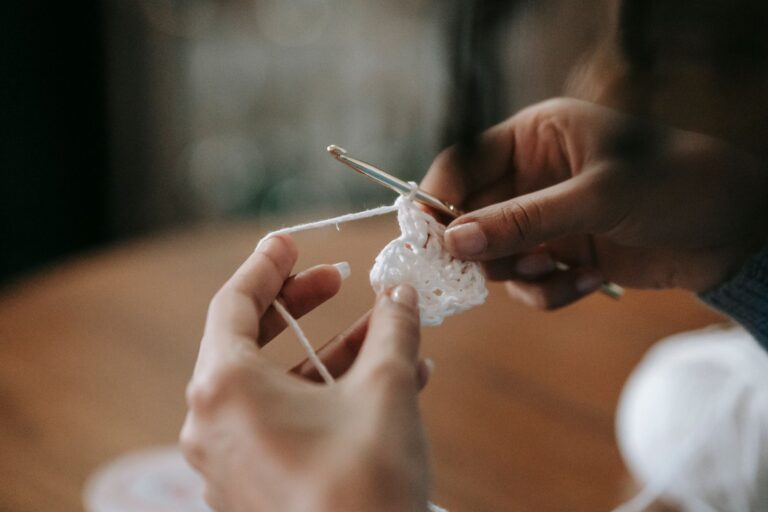
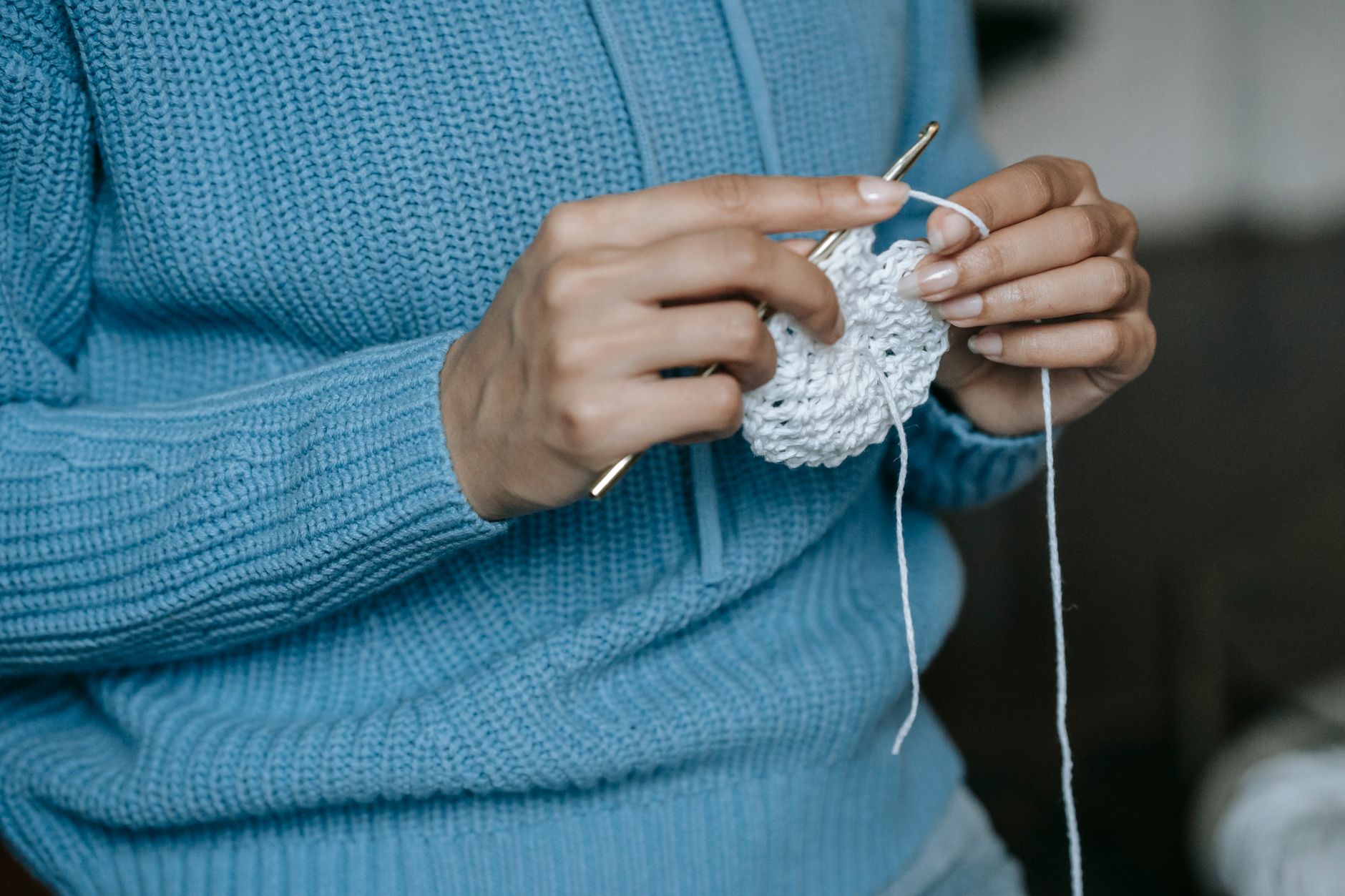
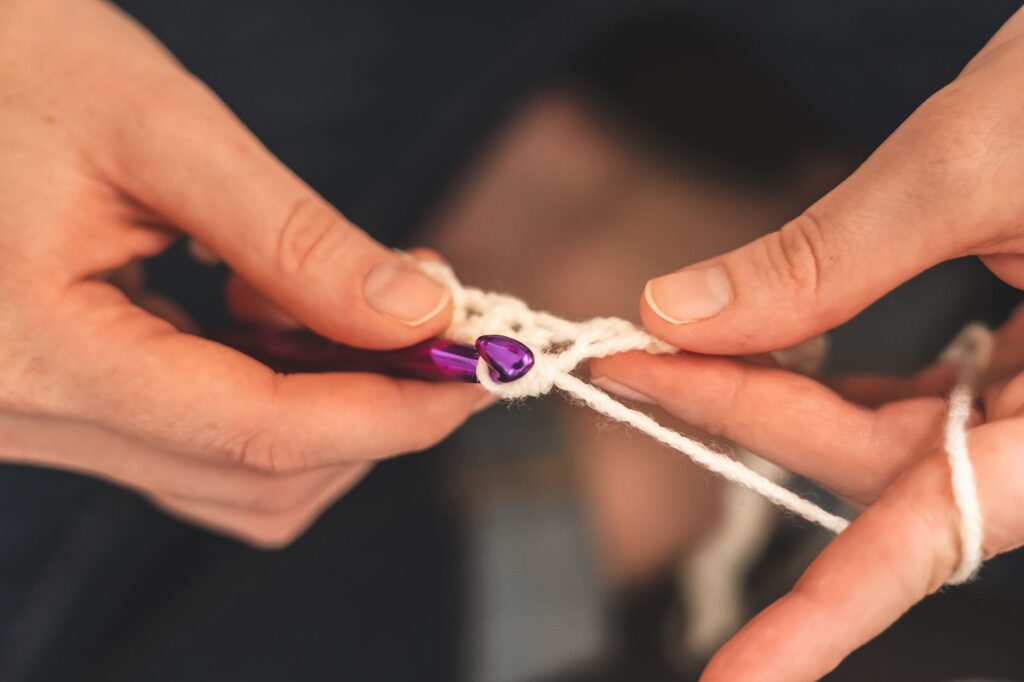
As you complete the final stitch of row one, your hook holds a single loop, and your working yarn trails from that loop back to your yarn ball or skein. Your non-hook hand is likely holding the fabric near where you just finished stitching, with your thumb and middle finger pinching the work to keep tension steady.
The Turning Chain, Physically
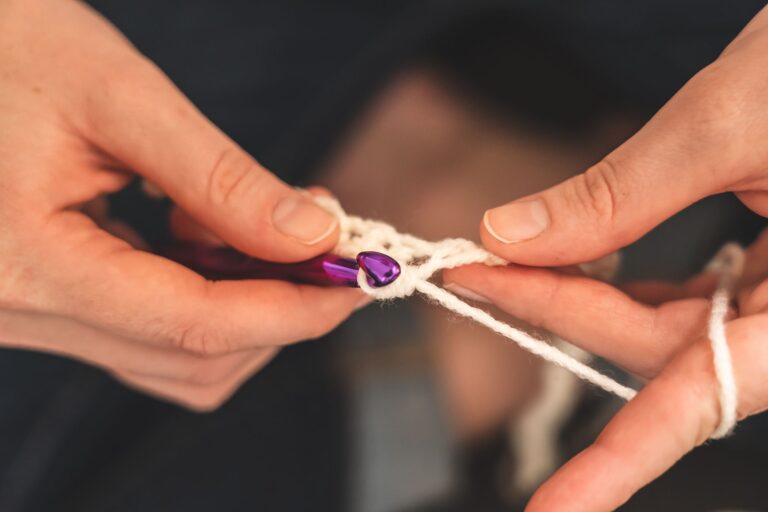
Without removing your hook from its loop, wrap the working yarn over the hook from back to front, the same motion as any other yarn over, then pull that wrapped yarn through the loop already on your hook. This completes one chain stitch. Repeat this motion the number of times your stitch type requires: once for single crochet, three times for double crochet.
The Physical Turn
Keeping your hook threaded through its final loop, rotate the entire piece of fabric in your non-hook hand, not just your wrist, so the side that was facing away from you now faces toward you. Most right-handed crocheters find it natural to rotate the work from right to left, like turning a page, though either direction works as long as you stay consistent.
Finding Your First Stitch, Physically
Look at the top edge of row one now facing you. You will see a row of V-shaped stitch tops. Depending on your stitch type’s turning chain rule, your first stitch of row two either goes into the very first V you see, closest to where your working yarn currently sits, or skips that first V and goes into the second one instead.
For single crochet specifically, insert your hook under the two top loops of that first V shape, yarn over, and pull up a loop, giving you two loops on your hook, then yarn over once more and pull through both to complete the stitch. This is physically the same motion as every single crochet stitch in row one, just now facing the opposite direction.
Continuing Across the Row
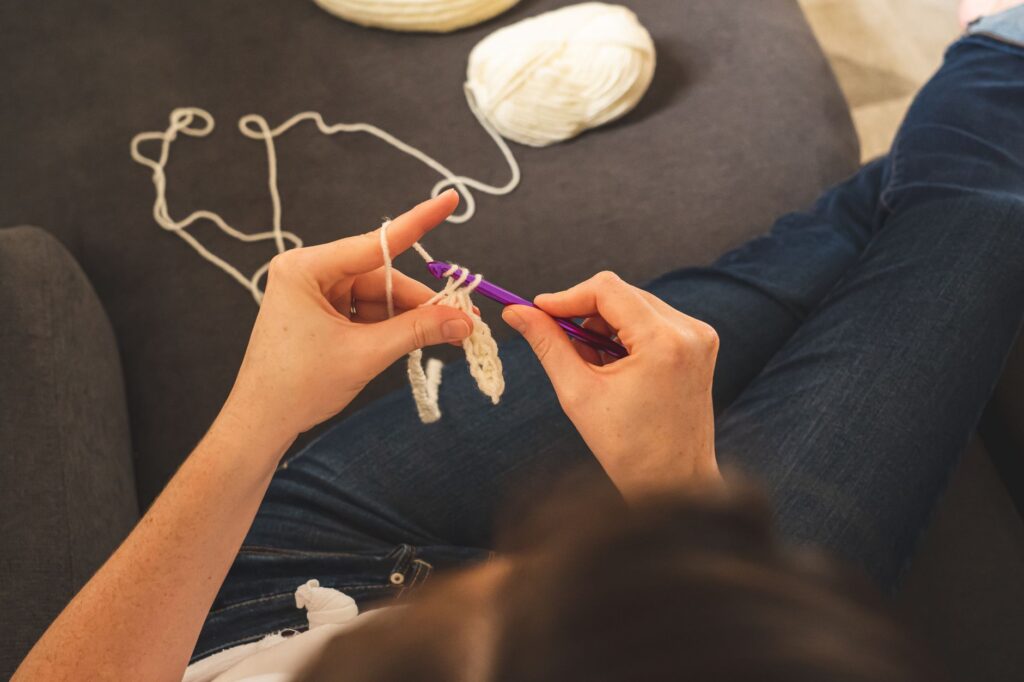
Move your hook to the next V shape to the left (or right, depending on your working direction), and repeat the same insert-yarn over-pull through sequence. Continue this same physical motion across the entire row, watching for the final V shape at the far edge, which sits at the top of your row one turning chain rather than a standalone stitch.
A Note for Left-Handed Crocheters
Everything above mirrors exactly for a left-handed crocheter, simply reversed left to right: your hook typically works from left to right across a row rather than right to left, and your turn rotates the opposite direction. The underlying physical logic, keeping your hook in its loop through the turn, finding the V shapes, inserting under both top loops, stays identical; only the directional orientation flips.
Building Muscle Memory Through Repetition
The described hand positions above will feel deliberate and slow at first, which is completely normal. I recommend working several practice rows of just single crochet, focusing purely on this physical description rather than speed, until locating the correct V shape and inserting your hook there becomes an automatic motion your hands find without conscious thought.
Frequently asked questions
What should I be looking at while working the second row?
Focus on the row of V-shaped stitch tops from row one facing you, since each V marks exactly where your hook needs to insert for the next stitch, a more reliable visual anchor than trying to count abstractly.
Why does my hook feel awkward inserting into the first stitch after turning?
This is a common early feeling, since the angle of approach into that first stitch differs slightly from stitches in the middle of a row. It becomes more comfortable with repetition as your hand adjusts to the motion.
Want the counting-focused troubleshooting version too?
See specific symptoms and fixes for common second-row count errors.
See the troubleshooting guide