
2nd row of crochet is the point where most early counting mistakes begin, since it is the first moment you need to apply your stitch type’s specific turning chain rule rather than just following a straight line of chain stitches. I keep this exact quick reference handy for students who already understand the general concept but want a fast reminder mid-project. This guide gives the condensed steps and the single most useful thing to check if your count comes out wrong.
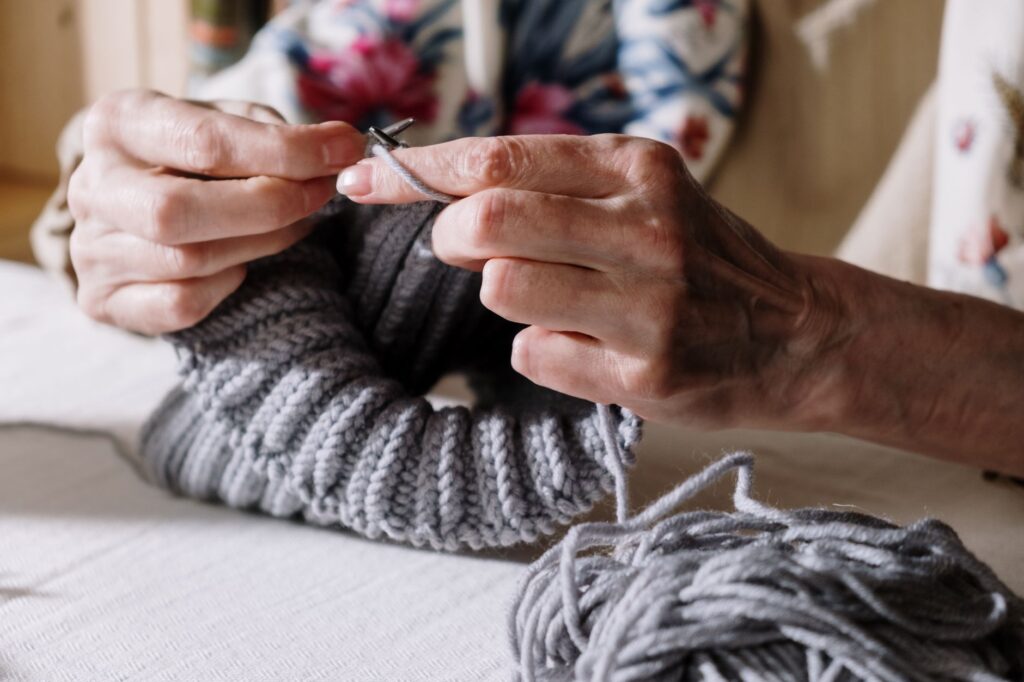
Quick Reference Steps
- Finish row 1, then chain the height for your stitch: 1 for single crochet, 2 for half double crochet, 3 for double crochet.
- Turn your work.
- Check whether your turning chain counts as your first stitch, based on your stitch type.
- Work into either the actual first stitch (if the chain does not count) or the second stitch (if the chain does count).
- Continue across, finishing the last stitch into the top of the previous row’s turning chain.
The One Thing to Check If Your Count Is Off
If row 2 comes out with a different stitch count than row 1, check first whether you applied the correct turning chain rule for your specific stitch type, since this single detail causes the overwhelming majority of second-row counting errors. A quick way to isolate the problem: recount row 1 alone to confirm it is correct, then recount just row 2 separately, comparing where exactly the two counts diverge.
Worked Example for Both Scenarios
For single crochet: chain 11, work single crochet in the second chain from the hook and each remaining chain (10 stitches). Chain 1, turn, then single crochet in the actual first stitch of row 1, continuing across for another 10 stitches total on row 2.
For double crochet: chain 13, work double crochet in the fourth chain from the hook and each remaining chain (10 stitches). Chain 3, turn, skip the first actual stitch of row 1 since the turning chain counts as it, then double crochet into the second stitch, continuing across and finishing the row with a double crochet into the top of the previous turning chain, for 10 stitches total on row 2 as well.
Both examples should land at the same 10-stitch count on row 2 as row 1, despite using different turning chain rules, which is exactly the detail worth internalizing through repetition.
Building the Habit Long Term
Once you have deliberately worked through both worked examples above a few times, the correct rule for whichever stitch you are using tends to become automatic within a handful of projects. I still occasionally recount deliberately when switching to a stitch type I have not used in a while, since the habit fades slightly with disuse the same way any less-practiced skill does.
This usually traces back to the turning chain rule for your specific stitch type being applied incorrectly, either counting a chain that should not count, or the reverse. Recheck the rule against a reference table for your exact stitch.