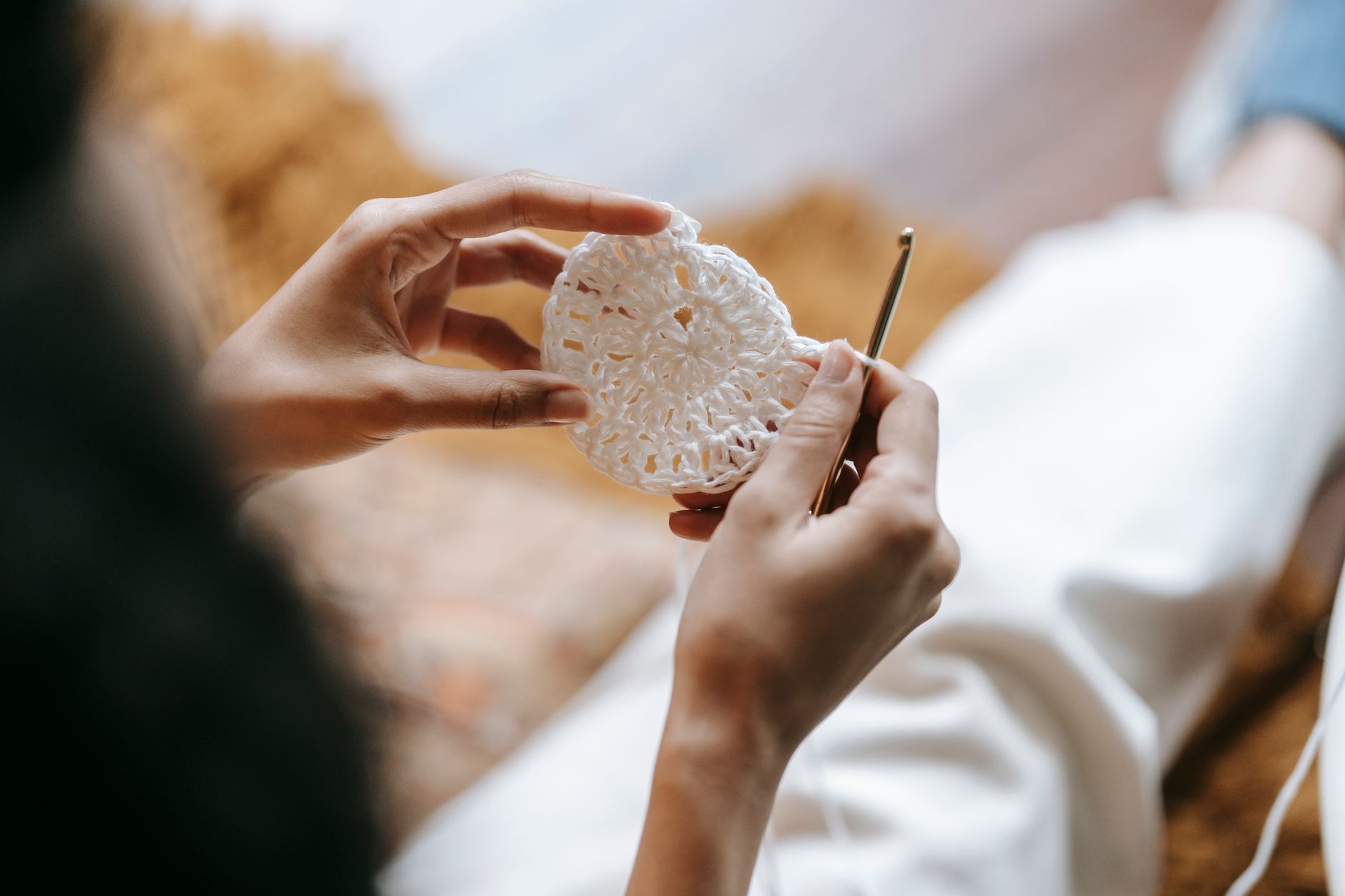
Corner to corner crochet, often shortened to C2C, builds a design diagonally out of small double crochet blocks instead of straight rows. You start with a single square in one corner, add blocks along the diagonal, then decrease back down to the opposite corner. I picked up C2C after struggling with tapestry crochet, and the diagonal build turned out to be far more forgiving for reading graphs. This method works with any weight of yarn, though worsted weight with a 5.0mm hook is the easiest combination for a first project. You do not need any stitch beyond double crochet and chain, which makes C2C a good second technique after the basics. By the end of this guide you will know how to start your first block, shape the increases and decreases, and read a C2C graph well enough to follow a graphghan pattern.

Step-by-Step: Starting Your First Block
Every corner to corner project begins with one block in the corner of your work. Get this part right and the rest of the piece falls into place.
- Chain 6.
- Double crochet into the 4th chain from the hook, then double crochet into each of the next 2 chains. That is your first block.
- Chain 6 again, turn your work.
- Slip stitch into the top chain of the first block, then chain 3.
- Double crochet 3 times into the same space to complete block two.
- Repeat the chain-6-and-block pattern to add block three, working the increase side.
I always count my blocks out loud for the first ten rows. It sounds silly, but it is the fastest way to catch a missed block before it becomes a shaping problem three rows later.
Increasing and Decreasing in C2C
A C2C piece grows on one side and eventually shrinks back down on the other, and both directions use a different move.
- To increase, chain 6 at the start of the row, slip stitch into the top of the previous block, then work 3 double crochets into that same chain space.
- To decrease, skip the increase chain entirely. Slip stitch across the top three stitches of the last block, then chain 3 and work 3 double crochets into the next block’s chain space.
- Continue decreasing one block per row until only one block remains.
My biggest early mistake was decreasing too early, which pulled the graphghan out of square. Count your blocks against the pattern chart before every decrease row, not after.

Reading a C2C Graph or Pattern
A C2C graph is just a pixel grid turned sideways. Each colored square on the chart represents one double crochet block, and you read the chart diagonally rather than row by row like a filet crochet chart.
Start in the bottom corner of the chart, which matches the first block you made. Work outward along each diagonal line, matching the yarn color to the square shown, then switch colors exactly where the chart changes. A typical graphghan runs 60 to 80 blocks wide, so I mark off every completed diagonal row on a printed copy to avoid losing my place.
Corner to corner charts use the same pixel logic as cross stitch patterns, so a free cross stitch chart online can usually be adapted into a C2C graphghan with a little resizing.
Frequently asked questions
What is the difference between C2C and regular granny squares?
Granny squares are worked in the round from a center point outward, while corner to corner crochet is built diagonally from one flat corner to the opposite corner using rows of double crochet blocks. C2C produces a single continuous rectangle or square, so there is no seaming between motifs the way there often is with granny squares. Most graphghan patterns use C2C specifically because the diagonal block structure lines up with pixel-style charts.
How much yarn do I need for a C2C blanket?
A throw-size C2C blanket around 60 blocks wide by 80 blocks long typically uses 2,500 to 3,000 yards of worsted weight yarn, though busy multi-color graphghans use more because of extra yarn ends. I always buy one extra skein of the main color, since running out mid-row on a diagonal piece is harder to fix than on a straight row.
Can I use C2C for something other than a blanket?
Yes. Corner to corner works well for pillow covers, baby bibs, scarves, and even small wall hangings, since the block structure scales down easily. A pixel scarf using a 20-block-wide chart takes a fraction of the yarn and time of a full blanket, which makes it a good way to test a new color chart before committing to a bigger project.
Pick your first C2C chart and get counting
Start small with a 20-block pixel scarf before you commit to a full graphghan. Once the block count clicks, reading any chart gets much faster.
Learn to read crochet chart symbols