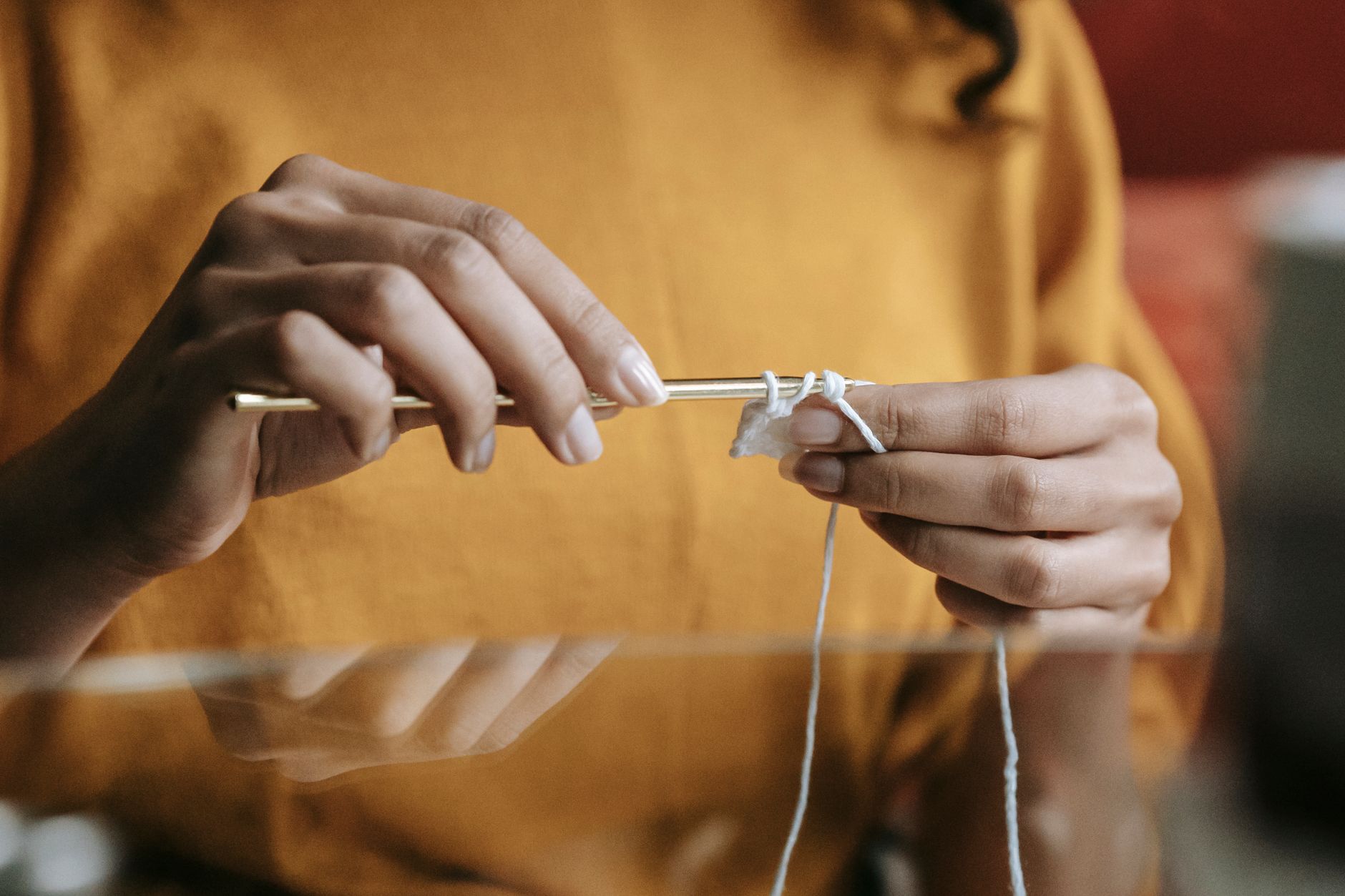
Changing colors while crocheting on a multi-color project is really a planning problem before it is a stitching problem, since the join itself is the same simple pull-through move no matter how many colors you are working with. Where projects actually go wrong is tangled strands, uneven stripe widths, and colors bleeding into each other on the first wash. I plan the color sequence and yarn management before I ever pick up the hook.

Planning a Stripe Sequence
Decide your full stripe order before you start rather than choosing colors row by row as you go, since a sequence planned in advance is far easier to keep even. I write mine out as a simple list, like 2 rows color A, 1 row color B, 2 rows color A, repeat, pinned somewhere visible while I work.
Odd row counts per stripe, like 1 or 3 rows instead of 2 or 4, keep your yarn changes landing on alternating sides of the work in turned-row projects, which spreads the loose ends out evenly along both edges instead of stacking them all on one side.
Managing Multiple Colors Without Tangling
For colorwork using more than 2 colors in the same section, like intarsia or tapestry crochet, wind each color onto a small bobbin or a yarn butterfly instead of working straight from full skeins. Full skeins tangle into a genuine knot within a few rows once you are managing 3 or more colors at once.
I keep bobbins on a small ring or clip so they hang below my work rather than rolling around loose, which cuts tangling by a large margin compared to loose skeins sitting in my lap.
Avoiding Color Bleed
Hand-dyed and dark, saturated colors are the most likely to bleed dye into lighter neighboring colors during the first wash. Test any unfamiliar yarn by wetting a small scrap and pressing it against a white cloth; if color transfers, wash that skein separately before working it into a multi-color project.
I always wash a striped or color-blocked piece in cold water for the first cleaning specifically, since hot water dramatically increases the chance of one color running into another.
Keeping the Join Itself Clean
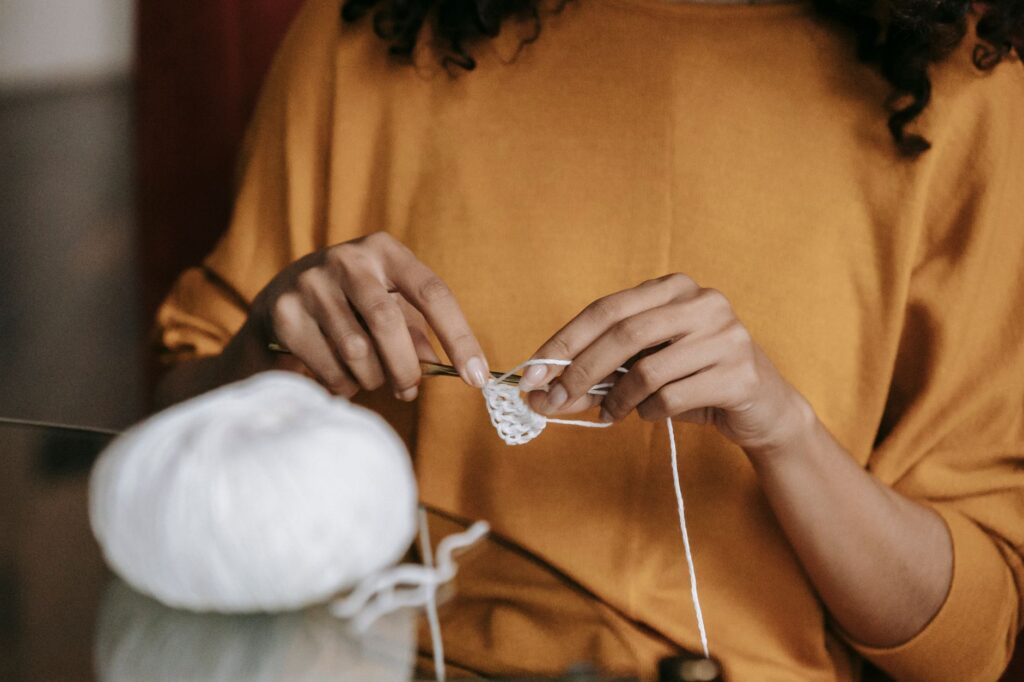
The actual color switch, finishing your last stitch of one color with the new color pulled through on the last step, works the same regardless of how many colors your project uses. For that exact mechanic, see invisible color change crochet for a full breakdown of hiding the transition line.
Frequently asked questions
How do you keep multiple crochet colors from tangling?
Wind each color onto a separate bobbin or yarn butterfly instead of working from full skeins whenever you are managing 3 or more colors in the same section. Keep the bobbins hanging below your work on a ring or clip rather than loose in your lap. Full skeins left loose tangle into a real knot within a handful of rows once more than 2 colors are in play.
Why does my crochet stripe pattern look uneven?
Uneven stripes usually come from switching colors at a different point in the row each time instead of consistently at the row’s edge. Plan your full color sequence before starting and always change color on the last pull-through of the final stitch in a row, never mid-row, to keep every stripe boundary landing in the exact same place.
Will dark yarn colors bleed onto light ones?
It can happen, especially with hand-dyed or very saturated dark colors next to white or pastel yarn. Test a small scrap against a white cloth while wet before committing a dark color to a multi-color project, and wash the finished piece in cold water for its first cleaning specifically to reduce the risk of dye transfer.
Wrap Up
A clean multi-color project comes down to planning your sequence, managing strands with bobbins, and testing for bleed before you commit dark colors. Once the plan is set, the join itself is the easy part, and you can follow the full mechanics at invisible color change crochet.