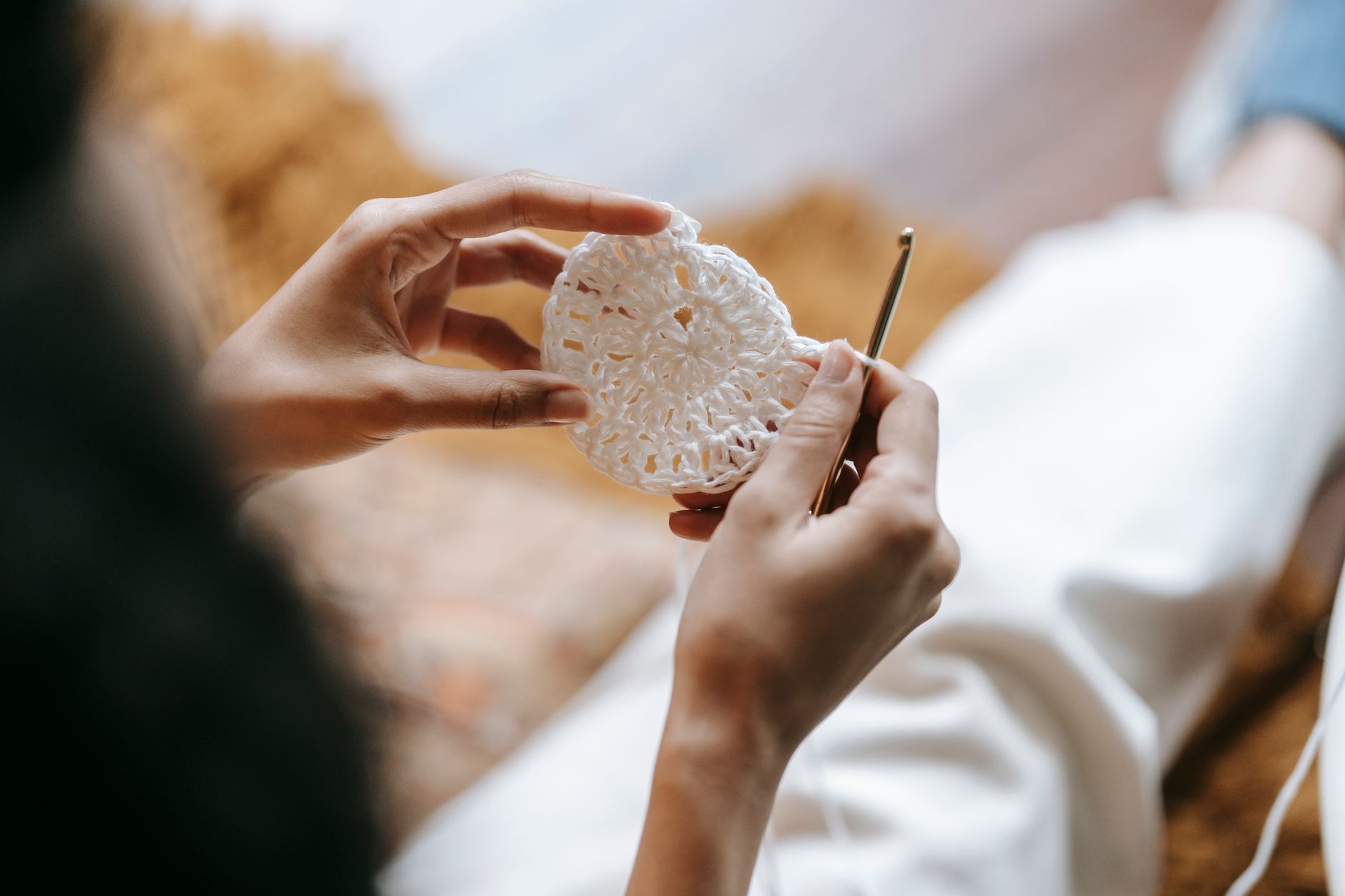
Different kinds of crocheting refers to the named construction styles within the craft, not skill levels or stitch types, things like Tunisian, filet, and tapestry crochet. I keep running into beginners who think “crochet” is one single method, and it genuinely surprises them how many distinct named styles exist under that one umbrella. This chart sorts the major ones by what tool or technique actually sets each apart.

The Chart
| Style | What makes it different | Best known for |
|---|---|---|
| Standard crochet | One hook, one active loop at a time | Amigurumi, garments, blankets |
| Tunisian crochet | Long hook holds a full row of loops before working back | Dense, woven-look fabric, afghans |
| Filet crochet | Open mesh grid of chains and double crochet blocks | Pictorial designs, curtains, table runners |
| Tapestry crochet | Multiple colors carried and locked in on the same row | Colorwork patterns, bags, baskets |
| Broomstick lace | Loops pulled onto a large dowel or knitting needle, then grouped | Loose, lacy, drapey fabric |
| Hairpin lace | Worked around a U-shaped metal loom frame | Long open strips, shawls |
| Corner-to-corner (C2C) | Worked diagonally in blocks from one corner outward | Pixel-style graphghan blankets |
| Freeform crochet | Improvisational, no written pattern or stitch grid | Sculptural, one-of-a-kind art pieces |
| Hyperbolic crochet | Rapid, mathematically consistent increases | Coral-reef-shaped sculptural forms |
How to Use the Chart
Match a pattern’s tool requirement against this chart before you buy anything specialty, since three of these styles, Tunisian, broomstick, and hairpin lace, need equipment beyond a standard hook. A pattern calling for a “Tunisian hook” or “afghan hook” specifically means the long, straight hook style, not a regular curved crochet hook in a bigger size, a mix-up I made myself the first time I bought yarn for a Tunisian project.
I use this chart most often when a pattern name confuses a beginner, someone assuming “Tunisian crochet” is a regional variation of standard crochet rather than a genuinely different construction method using a completely different tool. Once you know which row in this chart a pattern belongs to, the materials list makes far more sense. My own first Tunisian attempt failed for exactly that reason, wrong hook entirely.
Corner-to-corner and filet crochet both use standard hooks and stitches, single crochet or double crochet, but arrange them on a grid to form a picture, so they read as “different kinds of crocheting” through layout rather than through a new stitch or tool.

Frequently asked questions
Is there a standard symbol system across all crochet styles?
Standard crochet, filet, and C2C all follow the same core chart symbol set published by the Craft Yarn Council, so a chevron symbol means double crochet no matter which of those three styles you are reading. Tunisian crochet uses its own distinct symbol set, since its stitches work differently, holding loops on the hook rather than completing each one immediately.
Do you need special tools for Tunisian or hairpin lace crochet?
Yes. Tunisian crochet needs a long, straight afghan hook capable of holding an entire row of loops at once, unlike a standard curved hook. Hairpin lace needs a U-shaped metal loom frame, and broomstick lace needs a large dowel or knitting needle to pull loops onto. None of these substitute for a regular crochet hook.
Which kind of crocheting is easiest for a beginner to start with?
Standard crochet, using a regular hook and basic stitches like single and double crochet, is the easiest starting point, and every other style on this chart builds on those same fundamental stitches. Learn standard crochet first, then move into Tunisian or filet once chains, single crochet, and double crochet feel automatic.
Wrap Up
Most of what looks like a completely separate craft is really standard crochet stitches rearranged, gridded, or paired with a specialty tool. Once you can place a pattern name on this chart, its materials list stops being confusing. For the symbol system shared across most of these styles, see crochet chart symbols.