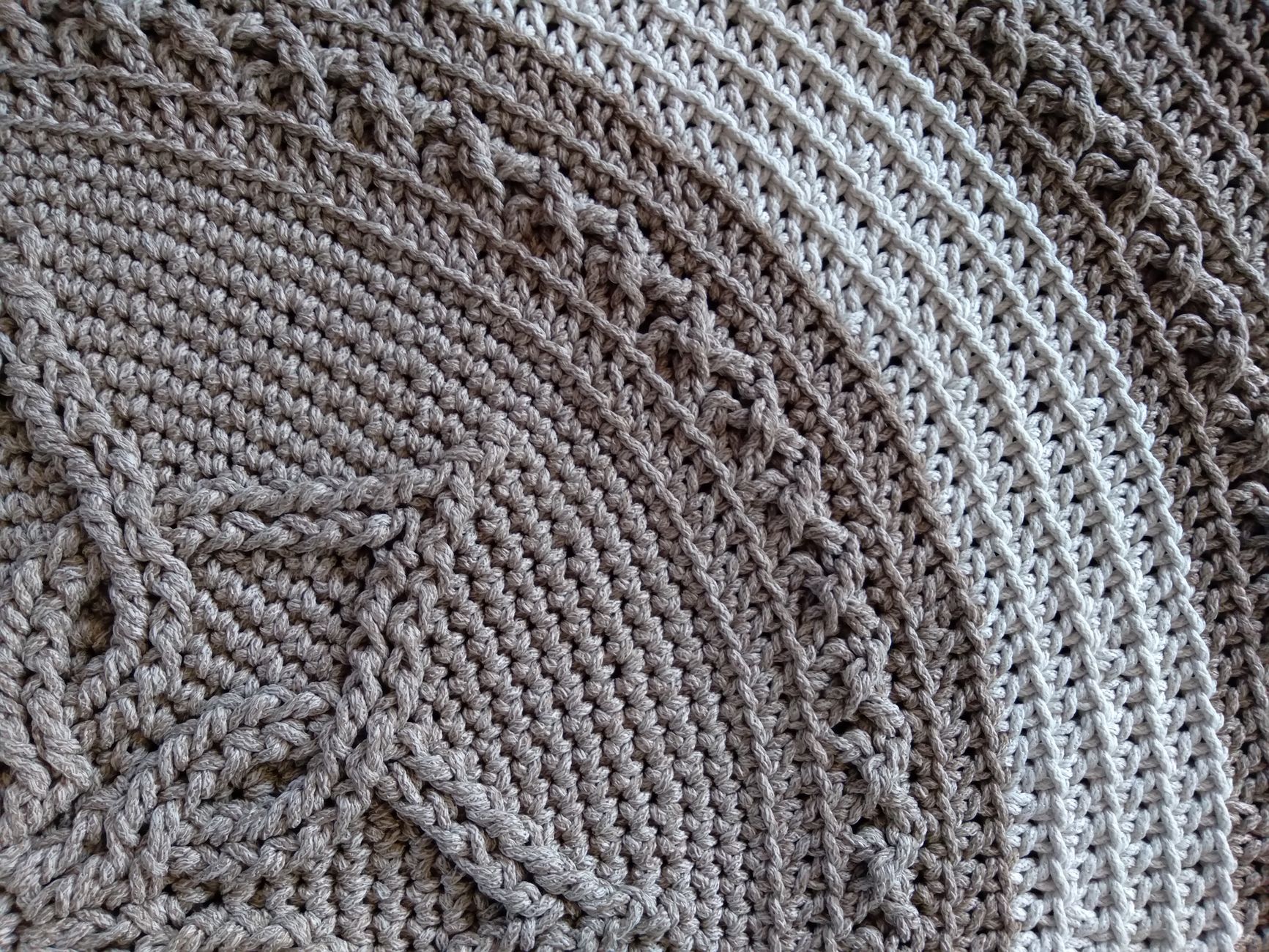
Crochet with double ended hook refers to Tunisian crochet, a technique using a long hook with a working end on both sides, or a cable connecting two hook ends, that holds multiple loops across a row at once rather than closing each stitch immediately. I picked up Tunisian crochet specifically for the dense, woven-look fabric it produces, which neither standard crochet nor knitting quite replicates. This guide covers the tool, the basic forward and return pass structure, and how it differs from standard crochet.

The Tool Itself
A Tunisian hook is longer than a standard crochet hook, since it needs to hold an entire row of active loops at once, similar to how a knitting needle holds live stitches. Some versions have a hook on just one end with a stopper on the other to keep stitches from sliding off; true double-ended versions have a working hook on both ends, useful for double-sided color work.
The Forward and Return Pass
Tunisian crochet works in two passes per row rather than one continuous pass like standard crochet. The forward pass picks up a loop from each stitch across the row, building up a full row of loops on the hook without closing any of them yet. The return pass then works back across, closing those loops two at a time, which is what gives Tunisian crochet its distinct textured, ribbed-looking finish.
- Forward pass: insert the hook into each stitch across the row, yarn over, and pull up a loop, leaving all the loops on the hook rather than closing them.
- Return pass: yarn over and pull through the first loop only, then yarn over and pull through two loops at a time, repeating across until one loop remains on the hook.
- That remaining loop becomes your first stitch of the next forward pass.
How Tunisian Differs from Standard Crochet
Standard crochet closes each stitch immediately as you work it, using only one active loop at any given moment. Tunisian crochet instead builds up multiple loops across an entire row before closing any of them, which is closer to how knitting holds a full row of live stitches, even though the underlying stitch structure and tool remain distinctly crochet.
The resulting fabric is noticeably denser and less stretchy than standard crochet, closer in feel to a woven textile, which makes it well suited to structured bags, placemats, and garments that benefit from a firmer hand.

Common Uses for Tunisian Crochet
Structured bags and cases benefit most from the firmer, less stretchy fabric Tunisian crochet produces, since the resulting material holds its shape without needing a stiffener or lining the way a softer standard crochet fabric might. Placemats and table runners are another common use, since the flatter, more uniform texture reads as more polished for a table setting than typical crochet stitch texture.
Tunisian simple stitch, the most basic Tunisian stitch, also works well as a base for cross-stitch style embroidery afterward, since its grid-like structure accepts embroidered detail more cleanly than standard crochet fabric does.
Frequently asked questions
Do I need a special hook for Tunisian crochet?
Yes, a standard crochet hook is too short to hold an entire row of active loops. A Tunisian hook, either with a stopper on one end or a working hook on both ends, is required for this technique.
Why would I use a true double-ended hook instead of a single-ended Tunisian hook?
A true double-ended hook allows double-sided color work, where you can work a row from either end without turning the piece around, useful for advanced two-color Tunisian techniques.
Does Tunisian crochet curl like single crochet does?
Tunisian simple stitch fabric tends to curl at the edges more noticeably than standard crochet, especially before blocking, so a wet block is almost always worth doing on a finished Tunisian piece.
Want to see other specialty crochet styles?
See an overview of the major crochet types and techniques.
See different types of crochet